Pricing & valuations for dealers
How to value a part-exchange in under a minute
Updated 3 September 2026 · 2 min read · by DealerPricing
Run the customer’s registration on the DealerPricing dashboard. In one screen you get the decoded spec, MOT status and advisories, keeper count, trade poor to clean values, a part-exchange figure and how many days similar cars take to sell. Adjust for condition and any advisories, and you have a defendable offer in under a minute.
Step by step
Search the registration on the dashboard
Enter the VRM and, if you know it, the mileage. DealerPricing decodes the exact make, model, variant, engine, gearbox and body style, then pulls every matching live listing.

The dashboard VRM search with registration and optional mileage fields Check the MOT status card
It shows the last test date, mileage, expiry and whether advisories were recorded. Advisories on tyres, brakes or corrosion are prep costs to take off your offer.
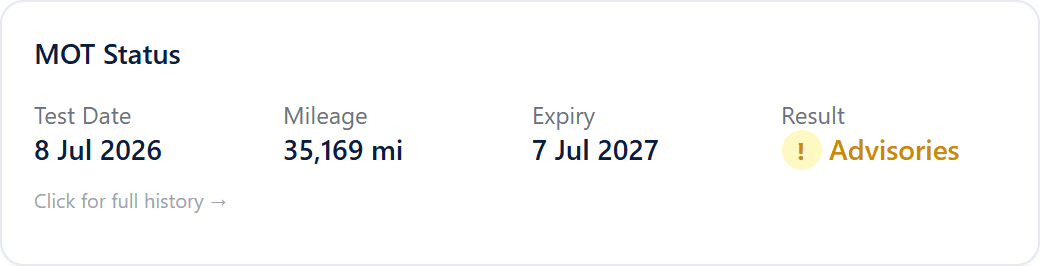
MOT Status card showing test date, mileage, expiry and an advisories flag Read the valuation and days to sell
Click Get Valuations for the trade bands and part-exchange figure, and read Avg Days to Sell in the Insights card. Slow sellers need a lower offer to protect stock turn.
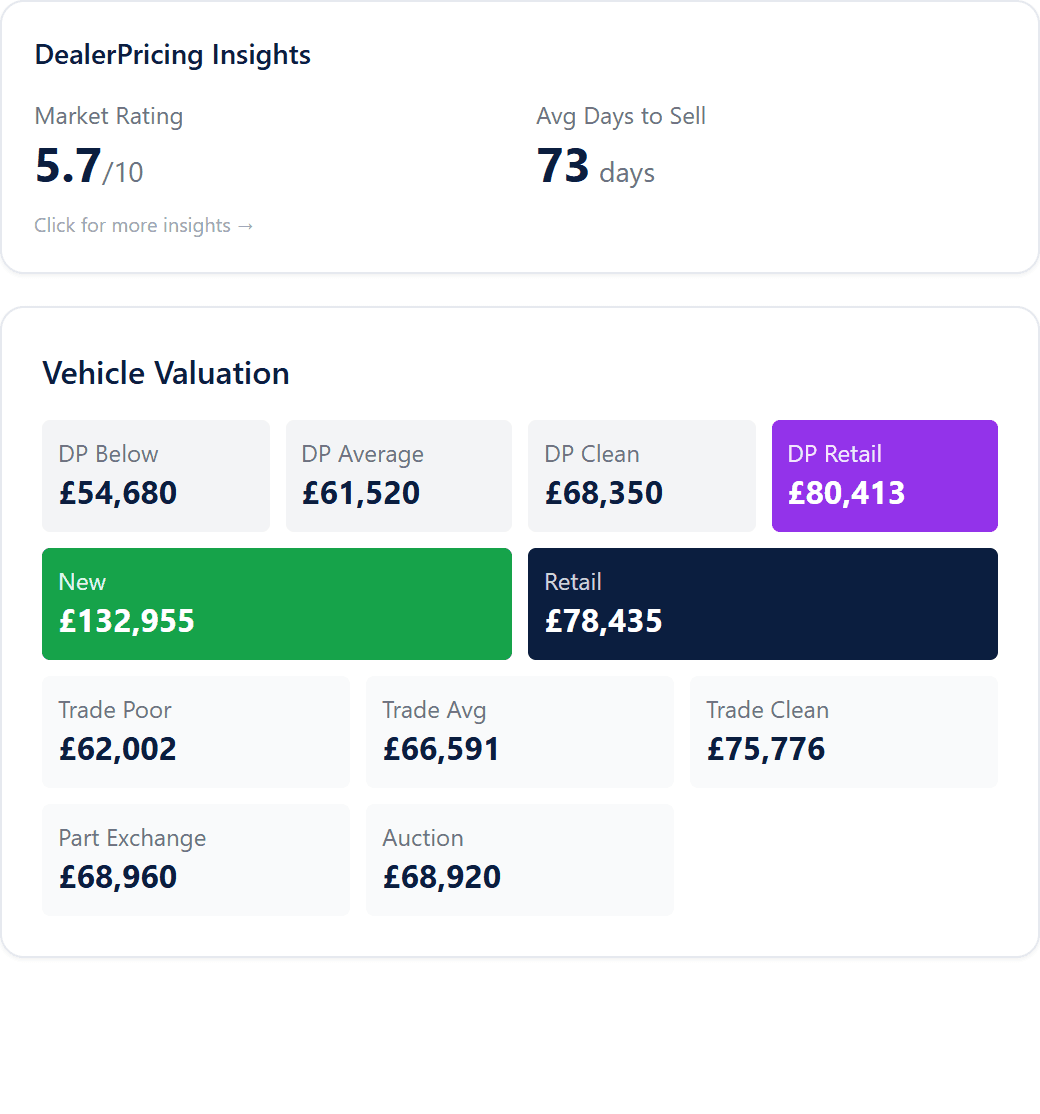
Vehicle Valuation card with part exchange and trade values Run a £2.50 history check before you commit
The History Check button runs a full provenance check from your account balance. Outstanding finance or a write-off changes the deal entirely.
What you’ll see
- Decoded make, model, variant, gearbox, fuel and keeper count
- MOT expiry and advisories that affect prep cost
- Trade poor, average and clean values plus a part-exchange figure
- Average days to sell and market rating for that model
- Any finance, theft or write-off marker from the history check
Ready to try it?
Plans from £70/month, 50% off your first month. 680,000+ live listings from 11,000+ UK dealers.
Start pricing with DealerPricing →Frequently asked questions
Should a part-exchange offer be below trade value?
Usually at or slightly below trade average, because you are also carrying the risk of unseen faults and the cost of prep. A clean, low-mileage example with full service history can justify trade clean.
How do I explain the offer to the customer?
Show them the screen. Live comparable listings, MOT advisories and days to sell are facts the customer can see, which makes a below-expectation offer easier to accept than a number from a book.
What if the car has outstanding finance?
Get a settlement figure from the lender and deduct it from the offer, or settle it directly. Never take a car in until the finance position is confirmed in writing.
Related guides
Terms explained
- Part exchange valuePart exchange value is the amount a dealer offers against a customer's existing vehicle when they buy a new one — usually equal to or slightly below the trade valuation.
- Trade valuationA trade valuation is the price a UK motor trader would pay for a vehicle as trade stock — typically the wholesale or auction value rather than the retail (forecourt) asking price.
- Outstanding financeOutstanding finance means a UK vehicle has an active hire purchase, PCP or other finance agreement registered against it — and the finance company has the legal right to repossess the vehicle even after sale.