Vehicle history checks
How to check if a car has outstanding finance
Updated 3 September 2026 · 2 min read · by DealerPricing
Run a vehicle history check on the registration. The finance section shows whether a hire purchase, PCP or conditional sale agreement is still recorded, and names the finance company, agreement type, date and contact details. Finance data is held by private registers, so no free DVLA check can show it. A DealerPricing check costs £3.99.
Step by step
Open the vehicle history check
Go to the DealerPricing vehicle history check. It searches the same national databases that branded checks such as HPI use: the Police National Computer, the insurers’ MIAFTR register, finance company records and the DVLA.
Vehicle history check →Enter the registration and pay £3.99
Type the number plate and click "Check History". One-off checks cost £3.99; subscribers pay £2.50 from their account balance. The report is ready in seconds.

The vehicle history check form with the Check History button Read the finance marker
Look for "Finance" in the History Check section. A clear car shows "No outstanding finance". A hit shows "Outstanding finance recorded" with the lender, agreement type, start date, term and a contact number.
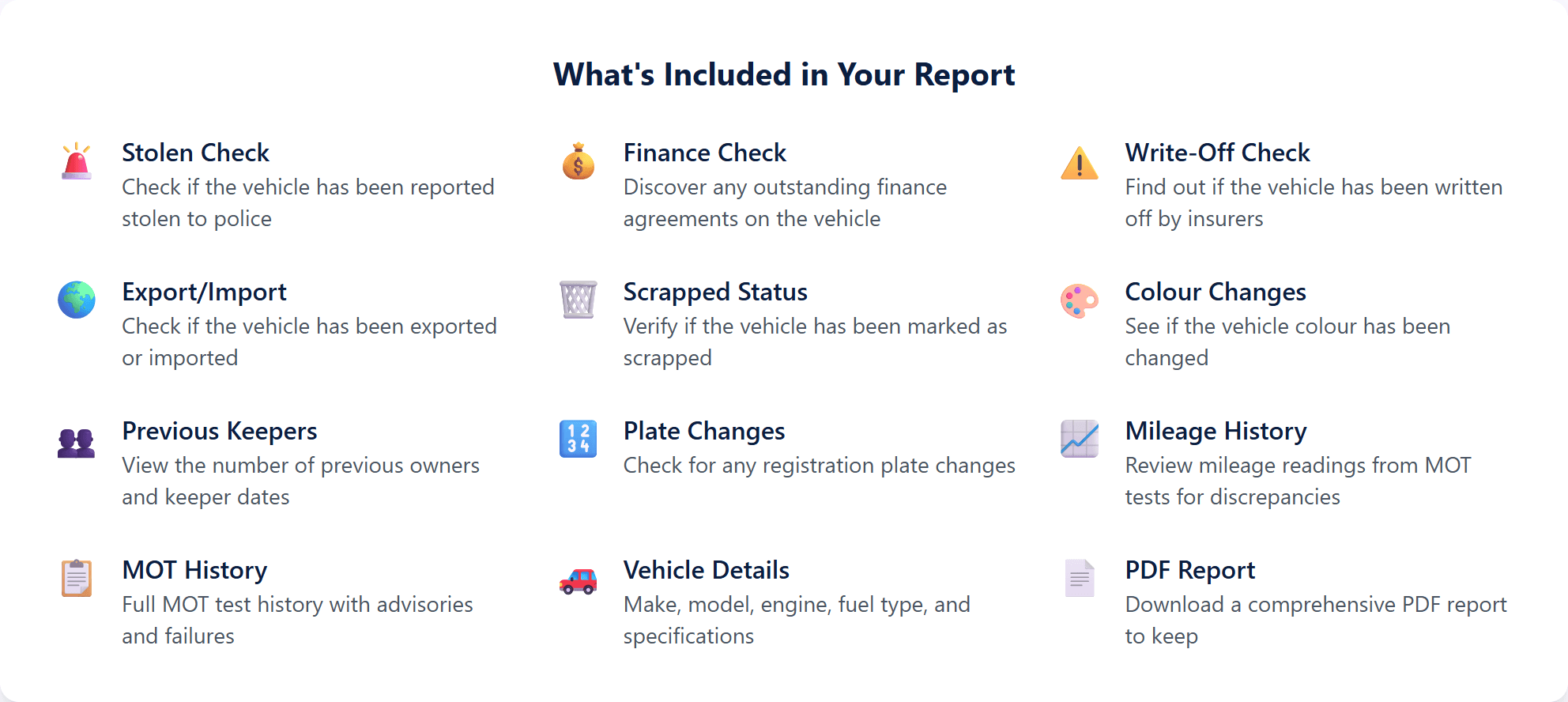
What is included in a DealerPricing history report: stolen, finance, write-off, export/import, scrapped, colour changes, keepers, plate changes, mileage, MOT history, vehicle details and PDF Get a settlement figure before paying
If finance is recorded, do not hand over money to the seller. Ask them for a written settlement figure from the lender, and either pay the lender directly or get written confirmation the agreement is settled.
What you’ll see
- Whether an active finance agreement is recorded
- Finance company name and contact details
- Agreement type (HP, PCP, conditional sale, lease), date and term
- Agreement number to quote when you call the lender
Ready to try it?
£2.50 for DealerPricing subscribers. Report stored for 6 months with a PDF.
Run a vehicle history check — £3.99 →Frequently asked questions
Who owns a car with outstanding finance?
On hire purchase and PCP, the finance company owns the car until the final payment is made. The person driving it is the keeper, not the owner, and cannot legally sell it. The lender can repossess the car from a buyer who paid the seller in full.
Can I check outstanding finance for free?
No. Finance agreements are registered with private credit bureaus, which charge for each search, so any "free finance check" is either DVLA data only or a teaser for a paid report. The paid element is what actually answers the question.
How common is undeclared finance?
Providers report that around one in four cars offered for private sale has a finance marker. Many sellers genuinely do not realise the finance must be settled before they sell.
What if the seller says the finance is paid off?
Ask for the lender’s settlement letter. Registers can lag a few days after settlement, so a letter dated before your check explains a stale marker. Without proof, walk away or pay the lender directly.
Related guides
Terms explained
- Outstanding financeOutstanding finance means a UK vehicle has an active hire purchase, PCP or other finance agreement registered against it — and the finance company has the legal right to repossess the vehicle even after sale.
- HPI checkAn HPI check is a UK vehicle history report that confirms whether a car is stolen, has outstanding finance, has been written off, has mileage discrepancy, or has had its plate, colour or keeper details changed.