Vehicle history checks
Cat C and Cat D write-offs: what they mean on an older car
Updated 3 October 2026 · 2 min read · by DealerPricing
Cat C and Cat D were insurance write-off categories used until 1 October 2017. They were based on cost: the car could be repaired, but the insurer judged it not worth repairing. They were replaced by Cat S and Cat N, which describe the type of damage instead. Cars written off before then keep their C or D record for life.
Step by step
Check the category and the date
A history check shows the category and the date of the loss. A Cat C or Cat D record will date from before October 2017; anything written off since then is Cat A, B, S or N. A car with both an old and a new record has been written off more than once.
Write-off check →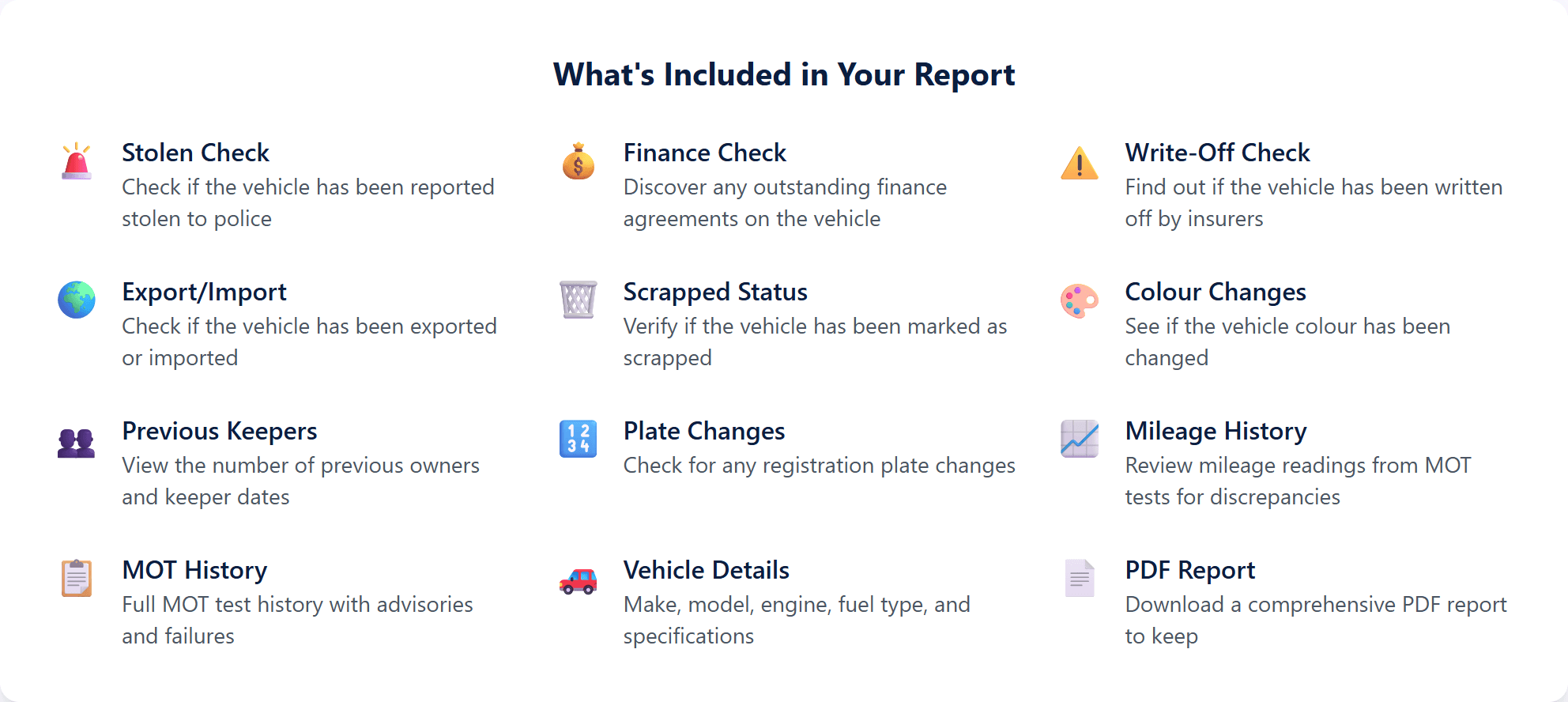
What a DealerPricing history report covers: stolen, finance, write-off, export/import, scrapped, colour changes, keepers, plate changes, mileage and MOT history Find out what the damage actually was
Cat C and Cat D describe the cost of the repair compared with the car’s value, not the type of damage. A Cat D car could have had structural damage, and on an older, low-value car fairly modest damage could have been enough for a Cat C. Ask for photographs, invoices and the repairer’s name.
If the structure may have been involved, get an inspection
Where you cannot rule out structural damage, treat the car as you would a Cat S and have it inspected independently before you buy.
Price it against a clean equivalent
A C or D record still lowers the value and narrows the pool of future buyers. Value the same car with a clean history and negotiate down from there.
Used car valuations →
Ready to try it?
£2.50 for DealerPricing subscribers. Report stored for 6 months with a PDF.
Run a vehicle history check — £3.99 →Frequently asked questions
Is Cat C the same as Cat S?
No. Cat C was decided by cost: the repair was judged uneconomic compared with the car’s value. Cat S is decided by the type of damage: the structure was affected. A Cat C car may or may not have had structural damage, so the letter alone does not tell you.
Is Cat D the same as Cat N?
Not exactly. Cat D usually meant lighter damage, but because it was also a cost decision you cannot assume the damage was non-structural. Cat N, used since October 2017, specifically means the damage did not affect the structure.
Why were Cat C and Cat D replaced?
The insurance industry changed the categories on 1 October 2017 so that they describe whether the structure was damaged, which matters for safety, rather than how much the repair would have cost.
Can a Cat C or Cat D record be removed?
No. The record stays on the insurers’ register for the life of the car, however well it was repaired.
Related guides
Terms explained
- Category S write-offCategory S means a UK vehicle has been written off due to structural damage but has been (or can be) repaired and legally returned to the road.
- Category N write-offCategory N means a UK vehicle has been written off due to non-structural damage — cosmetic, electrical or component-level — and can be repaired and legally returned to the road.