Vehicle history checks
Is it safe to buy a car on Facebook Marketplace? How to avoid scams on Marketplace, Gumtree and eBay (UK)
Treat every private advert as unverified until you have seen the car. Check the registration free with DVLA, run a £3.99 history check for finance, theft and write-offs, view the car at the address on the V5C, match the VIN to the log book, and never pay a deposit or use a "holding account" before you have seen it.
Warning signs in an online car advert
| Warning sign | What it usually means | What to do |
|---|---|---|
| Price well below similar cars | Bait for a deposit scam, or a car with a hidden problem | Compare with similar adverts and run a history check |
| Seller will not give the registration | The car may not exist, or its record would put you off | Do not travel or pay |
| Deposit or payment asked before viewing | Advance-payment fraud | Never pay before you have seen the car |
| Payment through a "holding account" or delivery firm | A fake escrow set up by the fraudster | Walk away; marketplaces do not hold car payments |
| Meeting anywhere but the V5C address | The seller may not be the keeper | Insist on the address on the log book |
| No V5C, one key, or "the log book is in the post" | Stolen, cloned or still on finance | Do not buy without the V5C |
| History check shows finance or a write-off not mentioned | The advert is not telling the whole story | Ask for proof of settlement, or walk away |
Signs taken from police and Citizens Advice guidance on online vehicle fraud and private sales.
Step by step
Get the registration before you travel
Ask the seller for the registration number. Most genuine sellers give it straight away; one who refuses, or sends a registration for a different car, has ended the conversation for you. Run it through the free check: the make, model, colour, engine and year must match the advert exactly.
Free DVLA and MOT check →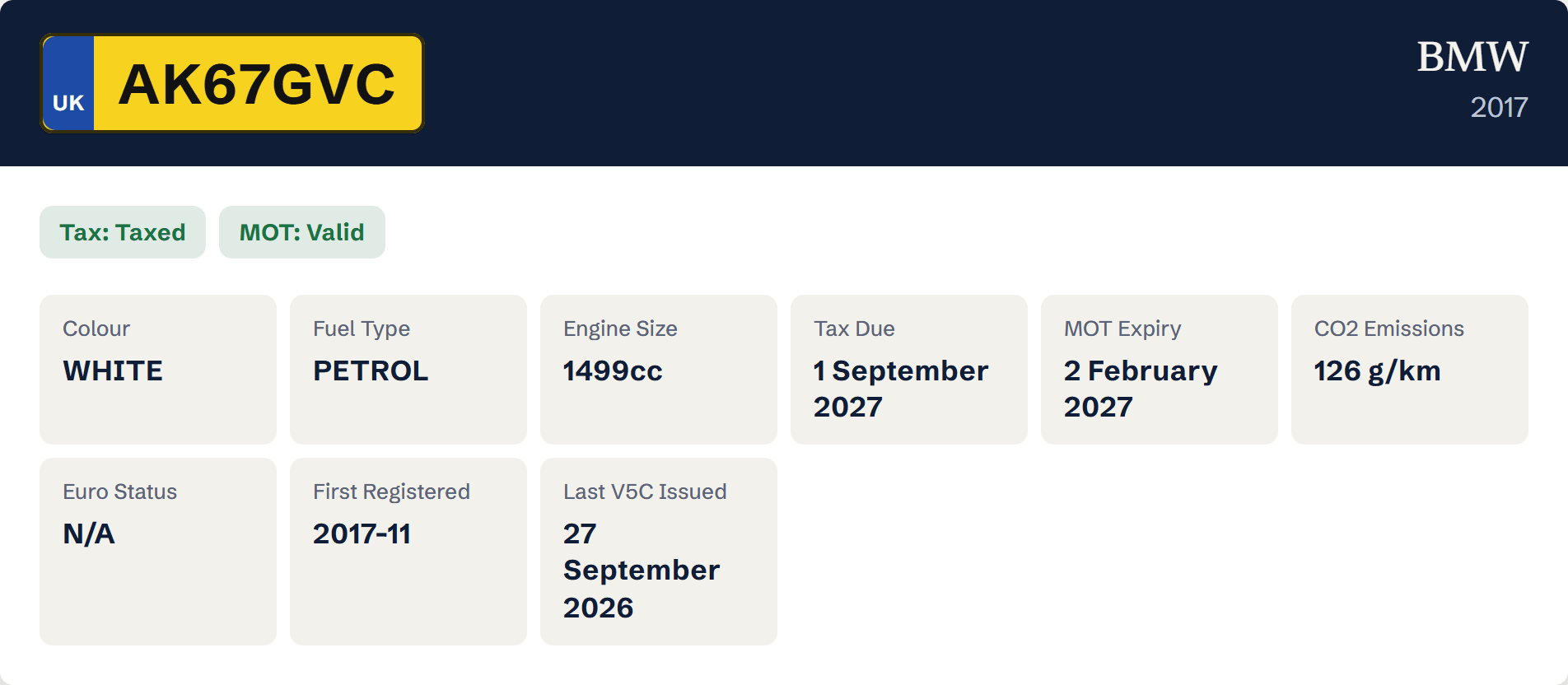
Free check result confirming make, year, colour, fuel and tax and MOT status Read the MOT history before you go
The free check also shows every MOT test with its mileage. Mileage should rise at each test. Falling mileage, a gap of more than a year, or the same advisory repeated year after year are questions to ask before you travel, not after.
Guide: reading MOT history →Run a £3.99 history check on the car you mean to buy
A free check cannot show outstanding finance, police or insurer stolen markers, insurance write-offs, keepers or plate changes. A history check shows all of them on one report, so you know before you meet whether the car is still owned by a lender or has been written off.
Vehicle history check →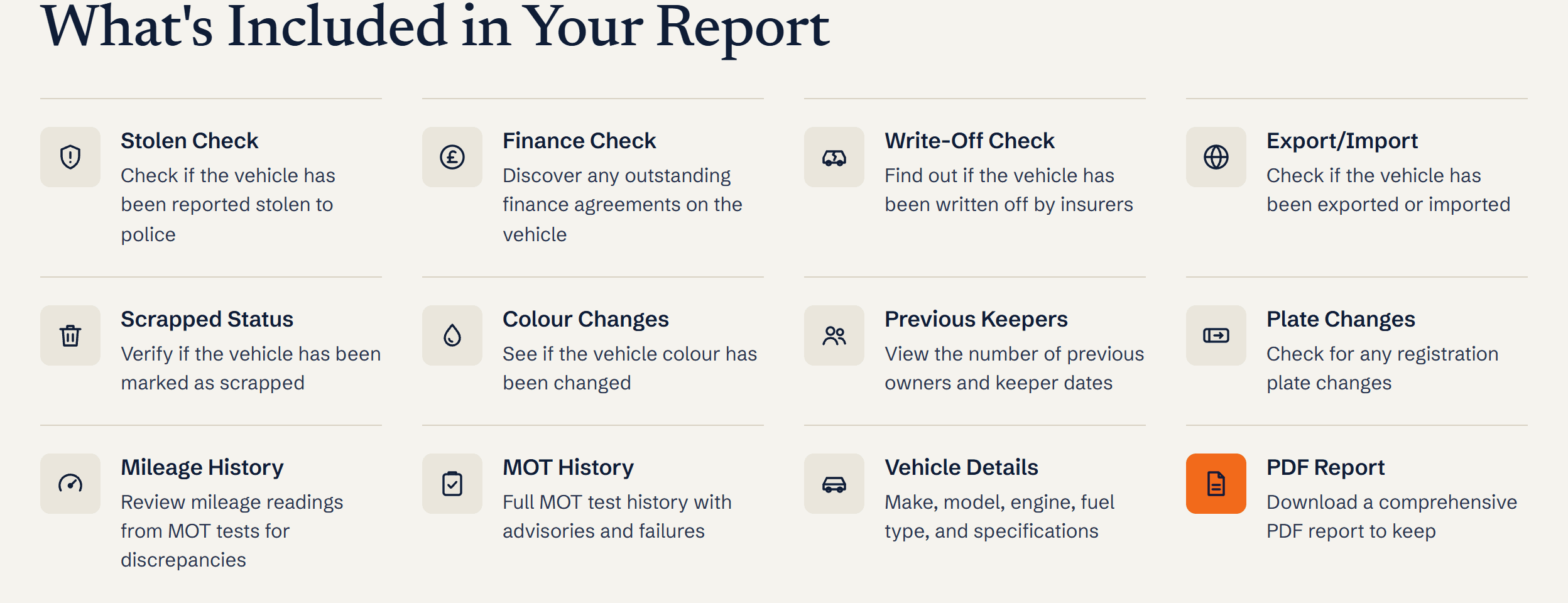
What a DealerPricing history report covers: stolen, finance, write-off, export/import, scrapped, colour changes, keepers, plate changes, mileage and MOT history Never pay before you see the car
The most common online car scam is a cheap car you are asked to secure with a deposit or a full payment before viewing, often through a "holding account" or "escrow" said to be run by a marketplace or delivery company. Marketplaces do not hold money for private car sales. If you cannot see the car, do not pay anything.
View it at the address on the log book
Meet at the registered keeper's address shown on the V5C, in daylight, and ask for ID that matches it. A seller who insists on a car park, a motorway services or "my cousin's house" is a warning sign, as are a single key, no V5C, or a story about why the paperwork is elsewhere.
Match the car to the paperwork
The VIN on the car (usually at the base of the windscreen and on the chassis) and the engine number must match the V5C and the history report. Hold the V5C up to the light for the DVL watermark. If anything does not match, walk away.
Guide: how to tell if a car is cloned →Pay in a way you can trace
Pay the person named on the V5C, at the handover, by a traceable method such as a bank transfer made while you are with them. Citizens Advice notes that paying by card can bring chargeback or Section 75 protection, which private sellers rarely offer. Avoid large amounts of cash, and never pay a third party.
What you’ll see
- The free checks to run before you travel
- The scams that target online car buyers and how to spot them
- What to check at the viewing and how to pay safely
- Where to report it if something goes wrong
Ready to try it?
£2.50 for DealerPricing subscribers. Report stored for 6 months with a PDF.
Frequently asked questions
Is it safe to buy a car on Facebook Marketplace?
It can be, if you treat the advert as unverified until you have seen the car and checked it. Check the registration free, run a £3.99 history check, view the car at the address on the V5C, match the VIN, and never pay before viewing.
Should I pay a deposit to hold a car?
Not before you have seen it. Requests for a deposit to "hold" a car you have not viewed are the most common online car scam. A genuine private seller can wait until you arrive.
What rights do I have buying from a private seller?
Fewer than from a dealer. A private seller must have the right to sell the car and it must match the description they gave you (Sale of Goods Act 1979, section 13), but the satisfactory quality rules that bind dealers do not apply. This is general information, not legal advice.
What does a history check show that the advert might not?
Outstanding finance and the lender, police and insurer stolen markers, insurance write-off category, plate and colour changes, number of previous keepers, import, export and scrapped markers, and a mileage check against MOT records.
I paid and the car never existed. What now?
Call your bank immediately on the number on the back of your card. Then report it to Report Fraud, which replaced Action Fraud in December 2025, at reportfraud.police.uk or on 0300 123 2040 (in Scotland, call Police Scotland on 101). Keep the advert and every message.
Are eBay and Gumtree any different?
The scams and the checks are the same on every site. Read what protection, if any, the site offers on vehicle sales before you pay, and treat any request to pay outside the site, or to a third party, with suspicion.
Ready to run it? Car history check prices compared
Related guides
Terms explained
- V5C logbookThe V5C is the official UK vehicle registration document issued by DVLA, showing the registered keeper, vehicle technical details and ownership history.
- Outstanding financeOutstanding finance means a UK vehicle has an active hire purchase, PCP or other finance agreement registered against it - and the finance company has the legal right to repossess the vehicle even after sale.