Vehicle history checks
How to tell if a car is cloned (UK)
A cloned car wears the registration of a genuine car of the same make, model and colour, so a check on the plate comes back clean. To spot one, match the VIN on the car to the V5C, check the log book's DVL watermark and serial number, compare every detail with the DVLA record, and meet the seller at the address on the V5C.
Signs of a cloned car
| Sign | Where to look | What it can mean |
|---|---|---|
| Make, model, engine or colour differs from the DVLA record | Free check on the registration | The plate belongs to a different car |
| VIN or engine number differs from the V5C | Chassis, labels on the car, V5C | The car is not the one on the log book |
| VIN looks scratched, re-stamped or covered | Every place the VIN appears on the car | The identity may have been altered |
| No DVL watermark, or a serial number in a stolen range | The V5C held up to the light | The log book may be forged or stolen |
| Log book older than the last one DVLA issued | Issue date on the V5C, against the free check | The seller does not hold the current log book |
| Seller will not meet at the V5C address | The arrangements for the viewing | The seller may not be the keeper |
| Only one key, no log book, cash only, price far below market | The advert and the viewing | Warning signs listed by police |
| You get fines for a car you do not own | Post from councils or parking firms | Your own plate has been cloned |
No single sign proves a car is cloned, but any one of them is a reason to stop and check before paying.
Step by step
Compare the advert with the DVLA record
Run the free check on the registration. Make, colour, engine size, fuel and year of manufacture must match the car exactly. A clone is usually a lookalike, so the detail that gives it away is often small: a different engine size, a facelift model on an older plate, or a colour the record does not show.
Free DVLA and MOT check →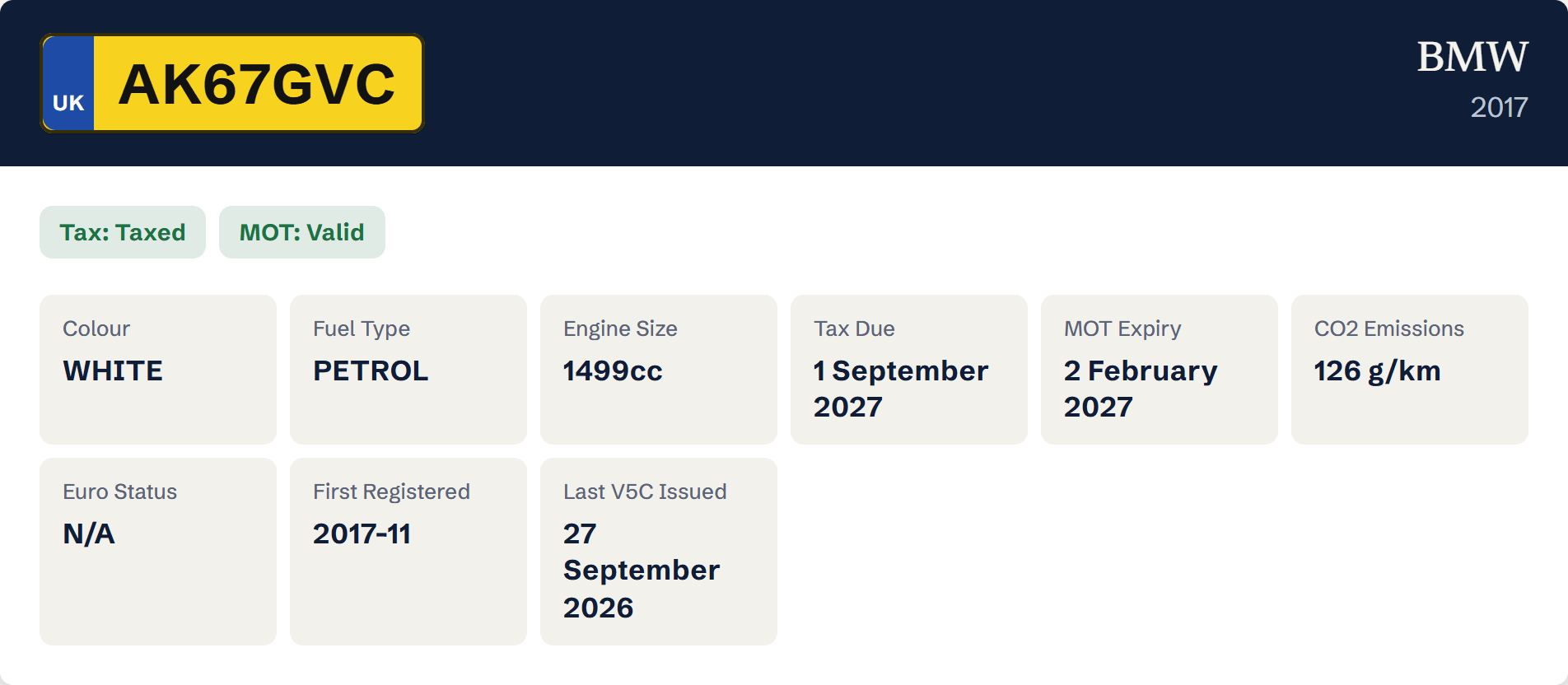
Free check result confirming make, year, colour, fuel and tax and MOT status Match the VIN on the car to the V5C
The vehicle identification number is usually stamped into the chassis and appears on the car in more than one place. Every VIN you find must match the V5C, and so must the engine number. Scratched, re-stamped or covered numbers, or labels that look newer than the car, are reasons to stop.
Check the log book itself
Hold the V5C up to the light: a genuine one has a DVL watermark. GOV.UK says a log book with a serial number between BG8229501 and BG9999030, or between BI2305501 and BI2800000, may be stolen, so call the police if it is in either range. Also compare the issue date on the log book with the date DVLA last issued one, shown in the free check: if the seller's copy is older, it is not the current log book.
Run a £3.99 history check
A history check on the registration shows the VIN and engine number held for the car, so you can compare them with the car in front of you, plus plate changes, colour changes, keepers and police and insurer stolen markers. A clean report on a car whose VIN does not match tells you the plate belongs to a different car.
Vehicle history check →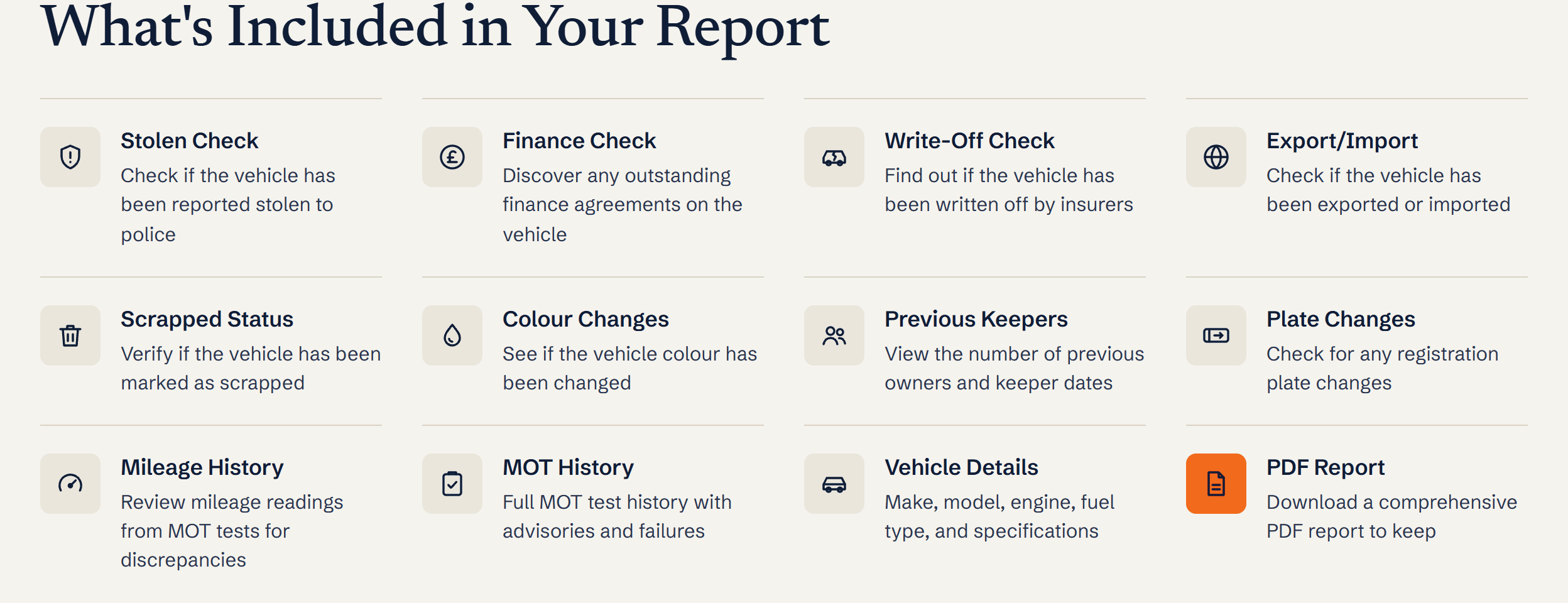
What a DealerPricing history report covers: stolen, finance, write-off, export/import, scrapped, colour changes, keepers, plate changes, mileage and MOT history Meet at the address on the V5C
View the car where the registered keeper lives, and ask to see ID that matches the name and address on the log book. Police warnings about cloned cars list sellers who insist on meeting elsewhere, only one key, no log book, a price well below the market and requests for cash.
If something does not match, walk away
Do not pay a deposit to "hold" the car. Keep the advert and messages and report it to the police on 101, or anonymously to Crimestoppers on 0800 555 111. Never apply for a replacement log book on a seller's behalf.
What you’ll see
- Whether the DVLA make, colour, engine and year match the car
- The VIN and engine number held for the vehicle, to compare with the car
- Previous registrations, colour changes and keeper changes with dates
- Police stolen marker and insurers' theft records
Ready to try it?
£2.50 for DealerPricing subscribers. Report stored for 6 months with a PDF.
Frequently asked questions
What is a cloned car?
A car, often stolen, given the registration of a genuine car of the same make, model and colour. False plates make it look legitimate, so a check on the plate returns the genuine car's clean record.
Will a history check show that a car is cloned?
Not on its own, because the plate belongs to a genuine car with a clean record. What the check gives you is the VIN, engine number, colour and plate history held for that registration. If those do not match the car in front of you, the plate does not belong to it.
What happens if I buy a cloned car?
Police warn that a buyer has no legal ownership of a cloned car: it is seized and not returned, and a private buyer who paid cash has little chance of getting the money back. This is general information, not legal advice.
How do I know the V5C is genuine?
A genuine V5C has a DVL watermark. GOV.UK says one with a serial number between BG8229501 and BG9999030 or between BI2305501 and BI2800000 may be stolen. The name and address should match the seller's ID and the place you view the car.
What should I do if my own number plate has been cloned?
GOV.UK says to report it to the police. In England and Wales the online cloned plates form also tells DVLA; if you call 101 instead, write to DVLA too. Then send the report reference to whoever issued the fines. You can keep driving your car.
Can anyone buy number plates for any registration?
No. In the UK plates can only be made up by a registered number plate supplier, who must see ID and a document showing you are entitled to the registration, such as the V5C. Criminals get round this, which is why the VIN matters more than the plate.
Ready to run it? Number plate change check
Related guides
Terms explained
- V5C logbookThe V5C is the official UK vehicle registration document issued by DVLA, showing the registered keeper, vehicle technical details and ownership history.
- VRM (vehicle registration mark)A VRM (Vehicle Registration Mark) is the unique alphanumeric code displayed on a UK vehicle's number plate, used by DVLA, insurers and ANPR cameras to identify the vehicle.
- Vehicle provenanceVehicle provenance is the verified history of a UK vehicle's ownership, status and incidents - covering stolen markers, finance, write-offs, mileage, plate changes, and keeper history.