Should you buy a Cat S or Cat N car? Write-offs explained
What Cat A, B, S and N write-off categories mean, how much less a Cat S or Cat N car is worth, the risks, and how to check write-off status for £3.99.
Cat S and Cat N are insurance write-off categories for cars damaged badly enough for an insurer to pay out but which can legally be repaired and driven again. Cat S means structural damage; Cat N means non-structural. Both are worth well below a clean car and both must be disclosed by the seller. A £3.99 history check shows the category, insurer and date of loss for any registration.
Key takeaways
- Cat A and Cat B cars must never return to the road. Cat S and Cat N can, once repaired.
- Cat S is structural damage; Cat N is anything else, from panels to electrics to flood.
- Expect a Cat S or N car to be worth roughly 20 to 40% less than a clean example, and to be harder to sell on.
- The category stays on the record for life, and a seller who hides it is misdescribing the car.
- Only a paid history check shows write-off status; free MOT and DVLA checks do not.
The four write-off categories
When an insurer decides a damaged car is not worth repairing, it records the car as a total loss with the industry's MIAFTR register and assigns a category. Since October 2017 there are four.
Cat A: scrap. The whole car must be crushed, including parts. It should never appear for sale.
Cat B: break. The body shell must be crushed, but parts can be salvaged and sold. A Cat B car should never be back on the road; if one is, it has been rebuilt illegally or the identity has been cloned.
Cat S: structural. Damage to the structure, such as the chassis, crumple zones or suspension mounting points, that must be professionally repaired. The car can be returned to the road after repair, and the V5C is marked.
Cat N: non-structural. Damage that did not affect the structure: panels, lights, interior, electrics, or flood and fire damage. It can still be expensive to repair, and electrical and flood damage in particular can cause faults long after the repair.
Cars written off before October 2017 carry the older Cat C (roughly Cat S) and Cat D (roughly Cat N) markers.
How much less is a Cat S or Cat N car worth?
There is no fixed discount, but in the UK market a Cat N car typically sells for 20 to 30% less than a clean equivalent and a Cat S car for 30 to 40% less, sometimes more on prestige models where buyers are choosier. The discount reflects three things: the risk that the repair was done badly, the reduced pool of buyers when you sell it on, and the fact that some insurers charge more or decline cover on written-off cars. Dealers price Cat S and N stock well below their clean comparables for the same reasons; the live listings on DealerPricing let you see the gap for a specific model by comparing marked and unmarked examples.
When a Cat S or Cat N car makes sense
A Cat N car with cosmetic damage that was repaired by a reputable bodyshop, with photographs of the damage and invoices for the repair, can be good value for someone who intends to keep it for years. A Cat S car repaired by a specialist with documented structural work and an independent inspection can also be sound. The cases to avoid are flood-damaged Cat N cars, where electrical faults surface for years, any car where the seller cannot show what was damaged and who repaired it, and any car where the write-off was not disclosed until you found it.
How to check if a car is a write-off
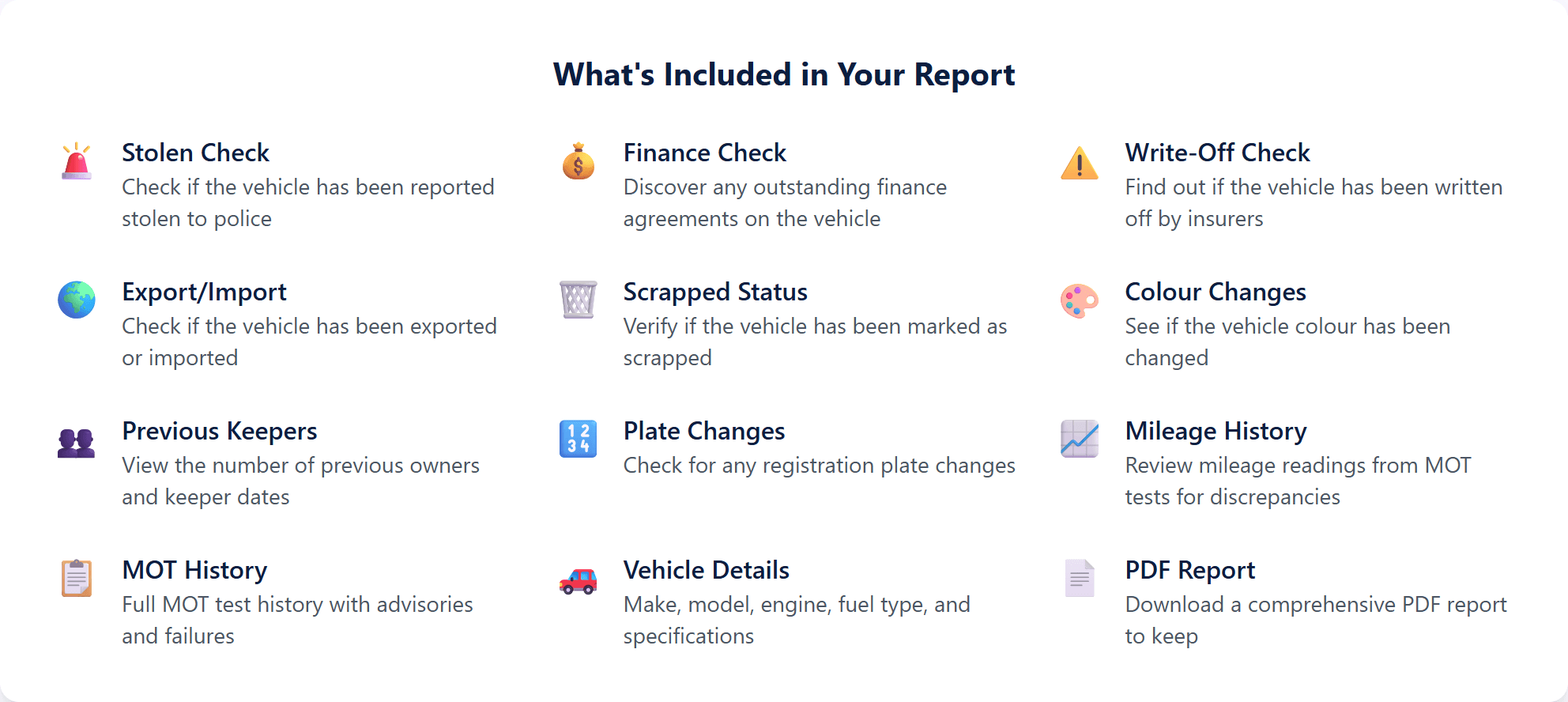
Write-off records are held on the insurers' MIAFTR register, which no free check can access. The DealerPricing vehicle history check searches it for £3.99 with no account and reports the category, the insurer, the date of loss and the date the record was added, alongside stolen, finance and mileage markers. The write-off check guide shows the report. If the report shows a write-off the seller did not mention, everything else the seller said should be treated with the same caution.
Questions to ask the seller
What was damaged, and where. Who repaired it and can you see the invoice. Are there photographs of the car before and after repair. Has it been independently inspected since. Has it been insured since the repair, and with whom. A seller with a genuinely well-repaired Cat S or N car will have answers and paperwork. Vague answers are the signal to walk away, whatever the price.
Insurance, finance and selling on
Tell your insurer the car is a Cat S or N; some charge more, a few decline, and not disclosing it can invalidate the policy. Some lenders will not finance a written-off car, which limits your buyers when you come to sell. When you do sell, the category must be disclosed in the advert and to the buyer, and the price will reflect it. Factor all of that in before deciding the initial discount is worth it.
Cat S and Cat N cars from dealers
Dealers can legally sell Cat S and N cars but must describe them as such. Many run a history check on every car they buy so the category is known before the car is priced; DealerPricing subscribers pay £2.50 per check and keep the PDF for six months. If you are buying a marked car from a dealer, ask for that report, the repair invoices and the inspection, and compare the price with clean examples of the same model and mileage.
Frequently asked questions
What is the difference between Cat S and Cat N?
Cat S means the insurer recorded structural damage, such as to the chassis or crumple zones, that needed professional repair. Cat N means the damage was non-structural: panels, lights, interior, electrics, flood or fire. Both can legally be repaired and driven, but Cat S usually carries a bigger discount because the repair is more critical to safety.
Is it safe to buy a Cat S car?
It can be, if the repair was done properly and you have the evidence: photographs of the damage, invoices from the repairer and ideally an independent inspection. Without that evidence you are trusting the seller on the one thing that matters most. Price the car well below a clean example and expect it to be harder to sell and insure.
How do I find out if a car has been written off?
Run a vehicle history check on the registration. Write-off records are held on the insurers' MIAFTR register, which free MOT and DVLA checks cannot see. The DealerPricing check costs £3.99 with no account and shows the category, insurer and date of loss.
Does a Cat N or Cat S marker ever come off a car's record?
No. The category is recorded against the vehicle for life and appears on every history check. A repaired car can be sound, but it will always be a Cat S or Cat N car, and it must be described as such whenever it is sold.