DealerPricing vs Auto Trader, CAP HPI and Glass's
How DealerPricing compares with Auto Trader, CAP HPI, Glass's and manual research for dealer valuations: data, refresh rate, checks included and price.
DealerPricing, Auto Trader's dealer tools, CAP HPI and Glass's all help UK dealers price a used car, but from different data. Guide books publish monthly values from past trade transactions; Auto Trader prices from its own marketplace; DealerPricing values from live listings across more than 11,000 dealer websites, refreshed hourly, with history checks built in from £2.50. Here is how they differ.
Key takeaways
- Guide books are consistent but lag the market by weeks; live data moves with it in both directions.
- Marketplace pricing tools see only the cars advertised on that marketplace.
- DealerPricing shows every comparable it used, so a valuation can be audited rather than trusted.
- History checks, MOT history and days-to-sell data are included rather than sold separately.
- Subscriptions start at £70 a month with no annual contract; branded history checks alone can cost £19.99 each.
The four ways dealers value cars
Most dealers use one or more of four sources. Printed and online guide books from CAP HPI and Glass's, which publish trade and retail values monthly. Auto Trader's dealer products, which price a car against adverts on the Auto Trader marketplace. Manual research, meaning an hour on classified sites and auction results. And live-data platforms such as DealerPricing, which read the whole visible market and value the exact car from what is for sale and what recently sold. Each has a place; the question is which one to bid from.
Guide books: CAP HPI and Glass's
Guide values are built from trade transaction data and updated monthly, with some products updating more often. Their strength is consistency: a lender, an auction house and a dealer can all quote the same figure, and finance settlements and stocking loans often reference them. Their weakness is timing. A monthly figure cannot reflect a price fall that started last week, and in a falling market dealers who bid to the book overpay until the next edition catches up. Guide values also describe a model rather than a car; the adjustment for mileage, spec and condition is left to the reader. The guide book comparison page covers the pricing and update cadence in detail.
Auto Trader's dealer tools
Auto Trader is the largest UK marketplace and its pricing tools are good at one thing: showing how a car is positioned against other adverts on Auto Trader. For a dealer who advertises there, that is useful for retail pricing. The limits are that the data is one marketplace's view, the tools are designed around retail advertising rather than trade buying, and the dealer package is priced as a marketplace subscription. Many dealers keep Auto Trader for advertising and use a separate tool for buying and part-exchange decisions. The Auto Trader comparison page goes through the overlap and the gaps.
Manual research
Browsing classifieds and auction results costs nothing but time, and time is the problem. Valuing one car properly takes 20 to 40 minutes, the comparables are whatever the dealer happened to find, and nothing is recorded. It works for a dealer buying two cars a week and breaks down at ten. It also cannot show sold prices or days to sell, only what other people are asking.
DealerPricing
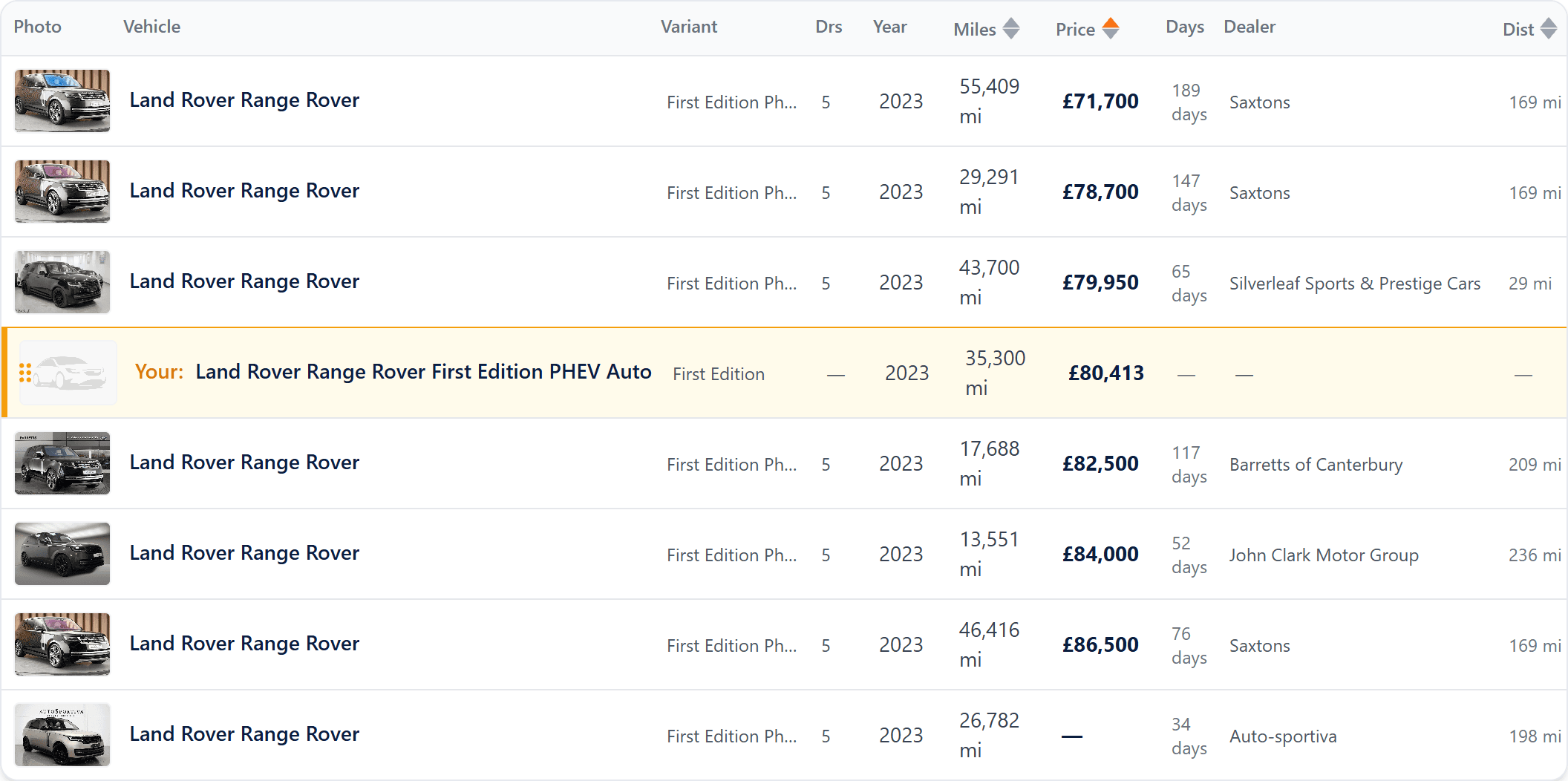
DealerPricing decodes the exact car from its registration and values it from the comparable cars for sale across the UK market, over 680,000 live listings from more than 11,000 dealers, refreshed hourly, plus the prices similar cars fetched in the last 90 days. The valuation shows Trade Poor, Average and Clean bands, a retail benchmark, a part-exchange figure and a confidence range, and every comparable is listed with price, mileage, days listed, dealer and distance so the figure can be checked. Days to sell, active supply and demand ratings sit on the same screen. MOT history and tax status are free, a full vehicle history check is £2.50, and Pro plans add service history checks and spec sheets. Plans start at £70 a month for 100 searches, with 50% off the first month and no annual contract. The dealer software page lists what each plan includes.
Side-by-side comparison
| Question | Guide books | Auto Trader tools | Manual research | DealerPricing |
|---|---|---|---|---|
| Where does the value come from? | Past trade transactions | Auto Trader adverts | Whatever you find | Live listings across 11,000+ dealers plus sold prices |
| How often does it update? | Monthly (some products more often) | Daily | When you look | Hourly |
| Can you see the comparables? | No | Auto Trader adverts only | Yes, unstructured | Yes, with price, mileage, days listed, dealer, distance |
| Sold prices and days to sell? | Sold data in some products | Partly | No | Yes, last 90 days |
| History check included? | Sold separately | No | No | £2.50 per check on any plan |
| Trade bands by condition? | Yes | Retail-focused | No | Yes: Poor, Average, Clean |
| Typical cost | Subscription per guide | Marketplace package | Time | From £70 a month, no contract |
Which should a dealer use?
For buying at auction, pricing part-exchanges and setting forecourt prices, a live valuation with visible comparables and days to sell is the better bid basis, because it reflects this week's market and can be defended line by line. A guide subscription still earns its place where a lender or auction house requires a guide figure, and Auto Trader remains the advertising channel most dealers cannot leave. The practical setup for many independents is Auto Trader for advertising, DealerPricing for every buying and pricing decision, and a guide only if a third party insists on it.
What to test before deciding
Take five cars you know well, ideally ones you bought and sold recently, and run them through each source. Compare the trade figure each gave against what you paid, and the retail figure against what you achieved. Note how many comparables each showed and whether you could see them. Then check the price of each tool against the number of cars you value in a month. The DealerPricing demo lets you run that test on real registrations before subscribing.
Frequently asked questions
Is DealerPricing more accurate than CAP or Glass's?
It is more current. Guide values are published monthly from past trade data, while DealerPricing values a car from the comparable cars listed and sold this week, at the exact mileage and specification, and shows the comparables so the figure can be audited. In a stable market the two agree closely; in a moving market the live figure reflects the change weeks earlier.
Can DealerPricing replace Auto Trader for a dealer?
For valuations, market insight and vehicle checks, yes. For advertising, no: Auto Trader is a marketplace and DealerPricing is a pricing and checking platform. Most dealers keep advertising where the buyers are and use DealerPricing to decide what to pay and what to ask.
What does DealerPricing cost compared with the alternatives?
DealerPricing subscriptions start at £70 a month for 100 searches and £99 for the Pro plan, with 50% off the first month and no annual contract. History checks are £2.50 each on any plan, against around £19.99 for a comparable branded check bought separately. Guide subscriptions and marketplace dealer packages are priced separately by their providers.
Does DealerPricing include a history check?
Yes. Every subscriber can run a full vehicle history check for £2.50 from their account balance, covering stolen markers, outstanding finance, insurance write-off category, mileage consistency, plate and colour changes and import, export and scrappage markers, with a PDF report. Free MOT history and tax status are shown on every search.