DealerPricing API: pricing data for dealer websites and DMS
What the DealerPricing API gives dealer websites, DMS and stock tools: valuations, comparables and vehicle checks, from £99 a month or pay as you go.
The DealerPricing API gives dealer websites, dealer management systems and stock tools the same live UK used car data that powers the DealerPricing dashboard: trade and retail valuations from live listings, comparable vehicles, sold prices, days-to-sell insights, MOT and DVLA data, and vehicle history checks. Access is pay as you go with no monthly fee, or on plans from £99 a month with an included quota.
Key takeaways
- One API covers valuation, comparables, market insights, MOT and DVLA data and provenance checks.
- Data comes from live listings across 11,000+ UK dealer websites, refreshed hourly.
- Pay as you go needs no subscription; Starter, Pro and Enterprise plans include monthly quotas.
- Typical uses: instant part-exchange quotes on dealer websites, DMS stock valuation, automated repricing.
- Documentation, keys and billing are self-service at the developer portal.
What the API is for
Dealers increasingly want pricing and checks inside the systems they already use rather than on a separate screen. A website that gives a customer an instant part-exchange figure from their registration converts more enquiries. A DMS that revalues stock overnight against the live market flags overage cars before the age report. A remarketing platform that attaches a provenance check to every lot saves buyers a step. The DealerPricing API exists so those products can use the same data the dashboard uses, without building their own market coverage.
What data is available
Vehicle decode. A registration returns the exact make, model, variant, engine, gearbox, fuel type, body style, doors and first registration date, the same decode the dashboard uses to find true comparables.
Valuation. Trade Poor, Trade Average and Trade Clean bands at the supplied mileage, a suggested retail figure, a forecourt average and a part-exchange figure, with a confidence range. The valuation is built from live comparables, not a monthly table, so it moves with the market.
Comparables. The listings the valuation was built from, with price, mileage, days listed, dealer and location, filterable by radius, mileage band and specification. Sold comparables from the last 90 days are available separately.
Market insights. Active supply, recent sold volume, average days to sell and demand, competition and turnover ratings for the vehicle.
MOT and DVLA. Full MOT history since 2005 with mileage and defects, current MOT expiry, tax status and DVLA-registered details.
Vehicle history check. The full provenance report: stolen markers from the PNC and MIAFTR, outstanding finance, insurance write-off category, mileage consistency, plate and colour changes and import, export, scrappage and recall markers. The provenance check page lists every marker.
How the data is sourced
Listings are read from dealer websites across the UK, over 680,000 active vehicles at any time from more than 11,000 dealers, and refreshed every hour. Sold prices come from listings that left the market in the last 90 days. Vehicle identity, tax and MOT data come from the DVLA and DVSA. Provenance markers come from the national databases used by every UK history check: the Police National Computer, the insurers' MIAFTR register, the finance registers and the DVLA. The same sources feed the dashboard, so a figure shown to a customer on a dealer's website matches the one the dealer sees.
Plans and pricing
Pay As You Go has no monthly fee: top up a balance from £10 and each call is charged from it, which suits a website making a few hundred valuation requests a month. Starter is £99 a month and includes a monthly endpoint quota for regular integrations. Pro at £199 and Enterprise at £399 a month raise the quota and add support for higher-volume DMS and marketplace use. Pay-as-you-go top-ups can be added to any plan when a quota is exhausted. The API pricing page shows the current quotas and per-call rates for each endpoint.
Getting started
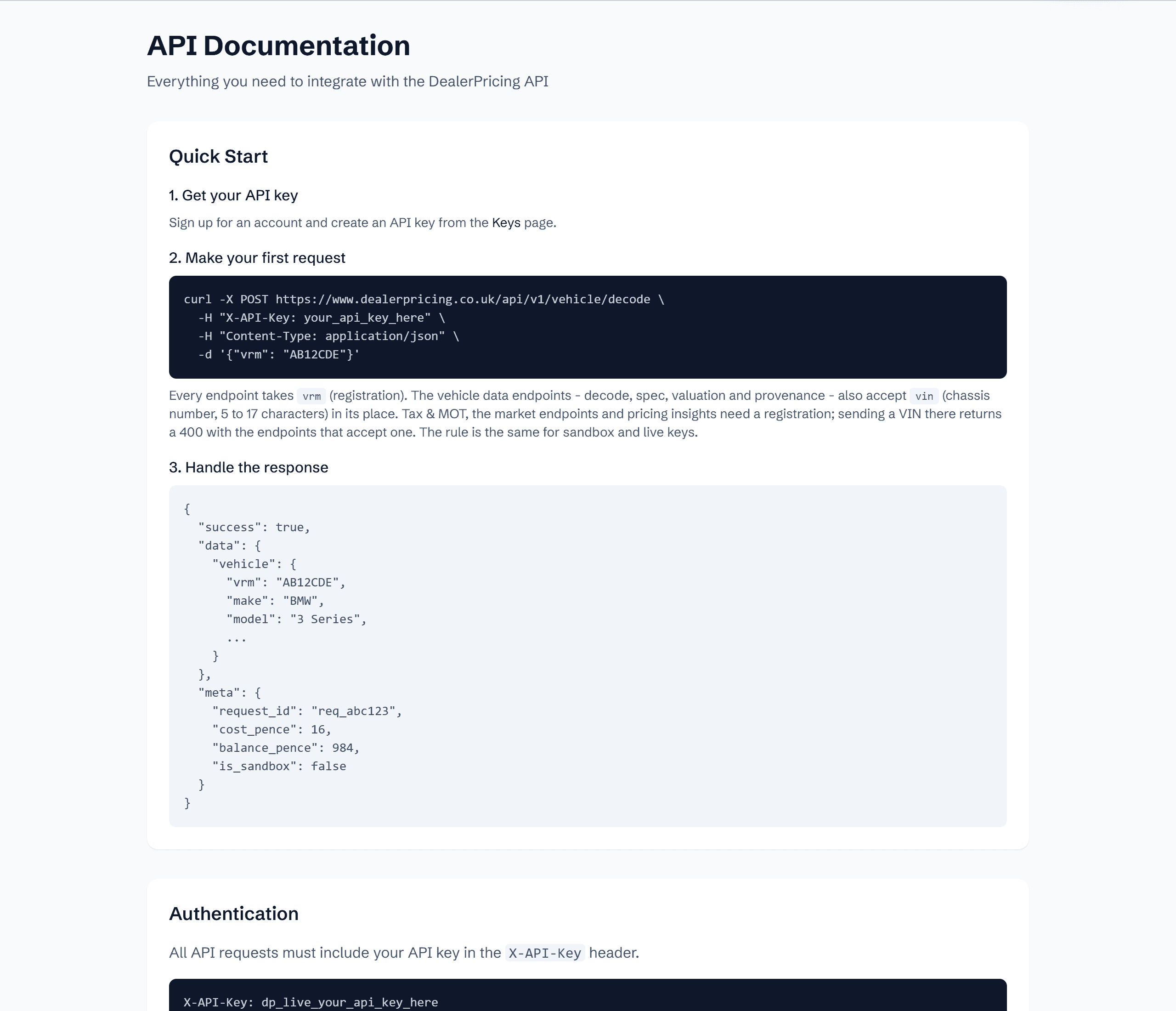
Create a developer account, generate an API key from the keys page and call the sandbox with a test registration. The API documentation covers authentication, each endpoint's request and response fields, rate limits and error codes, with example calls. A typical part-exchange widget needs two calls: decode the registration to confirm the car, then request a valuation at the customer's mileage. A DMS revaluation job loops the valuation endpoint over the stock list overnight and writes back the trade and retail figures with the days-to-sell rating.
Three integration patterns
Instant part-exchange quote on a dealer website. The customer enters their registration and mileage; the site calls decode and valuation and shows a part-exchange range with the comparables behind it. The dealer gets the enquiry with the car already valued.
Overnight stock revaluation in a DMS. Each stock car is revalued against the live market every night. Cars whose retail position has drifted above the comparables, or whose days listed have passed the market's average days to sell, are flagged for repricing.
Provenance check on every auction or remarketing lot. A history check is run when the lot is created and the PDF attached to the listing, so buyers see stolen, finance and write-off status before bidding and the seller answers fewer questions.
Who the API suits
Dealer website agencies adding valuation and check widgets, DMS and stock management vendors, auction and remarketing platforms, finance brokers who need a defensible vehicle value at quote stage, and dealer groups building internal pricing tools. Anyone building for the UK motor trade who needs a live, auditable vehicle value rather than a monthly table.
Frequently asked questions
Is there a free tier for the DealerPricing API?
There is no permanently free tier, but Pay As You Go has no monthly fee: top up a balance from £10 and pay per call, which is the lowest-cost way to test an integration or run a low-volume website widget. Plans with included quotas start at £99 a month.
Can the API run a vehicle history check?
Yes. The history check endpoint returns the full provenance report, covering stolen markers, outstanding finance, write-off category, mileage consistency, plate and colour changes and import, export, scrappage and recall markers, and can be attached to a listing or a customer quote.
How current is the valuation data?
Listings are refreshed hourly and sold prices cover the last 90 days, so a valuation requested this afternoon reflects price changes made this morning. Guide-book style monthly values are not used.
Does the API cover vans and commercial vehicles?
The decode, MOT, DVLA and history check endpoints work for any UK-registered vehicle. Valuation coverage is strongest for cars and light vans that are widely listed on dealer websites; the confidence range in the response shows how much comparable data supported each figure.