Vehicle history checks
What happens if you buy a car with outstanding finance?
Updated 3 October 2026 · 2 min read · by DealerPricing
If you bought the car privately, honestly and without knowing it was on hire purchase or conditional sale, the law usually makes you its legal owner and the finance company must pursue the seller instead. That protection does not cover motor traders or every kind of agreement. Keep your evidence, reply to the lender in writing and get advice.
Step by step
Don’t hand the car over straight away
If a finance company contacts you, ask it to set out its claim in writing. It is up to the finance company to prove you do not own the car, not for you to prove that you do.
Gather your evidence
Collect the advert, the receipt or proof of payment, messages with the seller, the seller’s name and address, the date you bought the car and any history check you ran before buying.
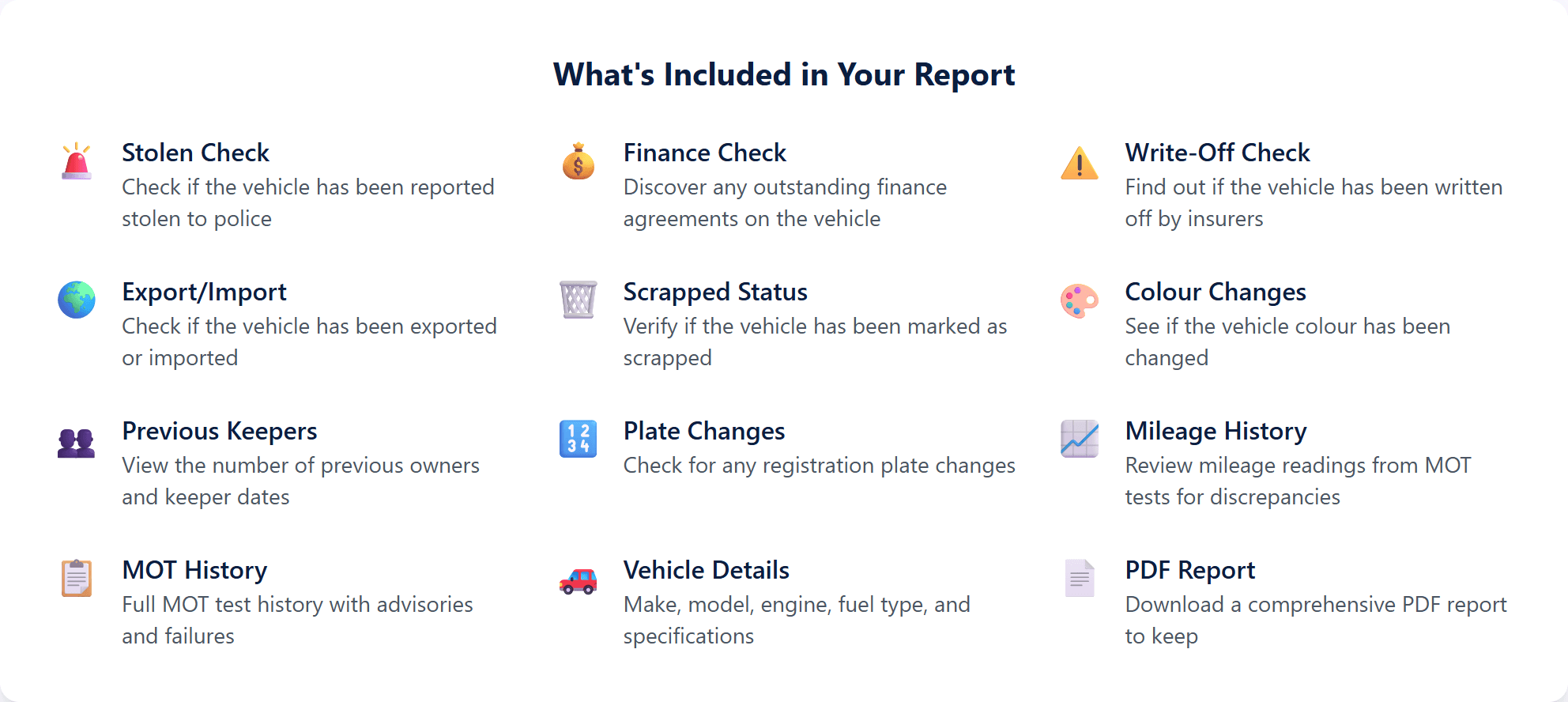
What a DealerPricing history report covers: stolen, finance, write-off, export/import, scrapped, colour changes, keepers, plate changes, mileage and MOT history Reply in writing
Explain that you bought the car as a private buyer, in good faith, without knowing about the agreement, and enclose copies of your evidence. Citizens Advice publishes guidance and template wording for this.
Citizens Advice guidance →If the car is taken, complain and escalate
Complain to the finance company first. If that does not resolve it, you can take the complaint to the Financial Ombudsman Service.
Claim against the seller
If you lose the car, you can claim your money back from the person who sold it to you, because they did not have the right to sell it. Against a business you also have rights under the Consumer Rights Act 2015.
Ready to try it?
Stolen, write-off and mileage checks are included in the same report.
Check a car for outstanding finance — £3.99 →Frequently asked questions
Who is protected when buying a car with outstanding finance?
Under Part III of the Hire-Purchase Act 1964 you are generally treated as the owner if you did not know about the agreement, you bought honestly with no reason to suspect a problem, you are a private buyer rather than a motor trader, and you are the first private buyer after the person who took out the finance.
Does the protection cover PCP, leases and logbook loans?
The 1964 Act covers hire purchase and conditional sale agreements, and most car PCP deals are a form of hire purchase. It does not cover leased or contract-hire cars, which never belonged to the seller, or logbook loans. This is general information, not legal advice; take advice on your own case.
Am I protected if I am a car dealer?
No. The protection is for private buyers. A motor trader who buys a car with finance on it does not become its owner, which is why dealers check every car they buy.
How do I avoid this happening?
Run a history check before you pay, and again on the day if time has passed since the first check, because finance can be added or settled in between. A DealerPricing check costs £3.99 and shows any finance agreement recorded against the car.