How to value a used car for the trade in 2026
A working method for UK dealers to price a used car for the trade: bands by condition, retail benchmark, margin and days to sell, all from a registration.
To value a used car for the trade, start from what comparable cars are selling for today, subtract the margin and preparation you need, and adjust for condition, mileage and how quickly that model turns. DealerPricing does this from a registration number in seconds, showing trade bands by condition, a retail benchmark, sold prices and days to sell so the bid is defensible.
Key takeaways
- A trade value is a buying price. It is the retail price minus margin, prep and the cost of the time the car will sit.
- Value by condition band, not a single number: Trade Poor, Trade Average and Trade Clean.
- Check what similar cars sold for, not just what they are listed for.
- Slow sellers need a lower bid regardless of how clean they are.
- Live market data updated hourly beats a monthly guide book when the market is moving.
What is a trade valuation?
A trade valuation is the price a motor trader should pay for a vehicle, as opposed to the retail price a customer pays on the forecourt. The gap between the two has to cover preparation, warranty, advertising, finance costs, the risk that the car does not sell, and profit. On a typical £10,000 used car that gap is usually £1,500 to £2,500 before VAT treatment, but it is not fixed: it depends on how fast the model sells and how many competitors are selling it.
That is why a good trade valuation is a range by condition. A car with a full history, two keepers and clean paint is worth more to the trade than the same model with a patchy history and four advisories, even though both are "the same car" in a guide book.
Step 1: identify the exact car
Valuing a "2019 BMW 3 Series" is meaningless when a 320i SE and a 330d M Sport Touring are thousands of pounds apart. Enter the registration on the DealerPricing trade valuation tool and check the decoded specification: make, model, variant, engine, gearbox, fuel, body style and doors. Confirm the mileage, because mileage moves the value more than any other single factor. If the car has options that change its value, such as a panoramic roof or upgraded wheels, the spec check on the Vehicle Details tab lists what left the factory.
Step 2: read the trade bands
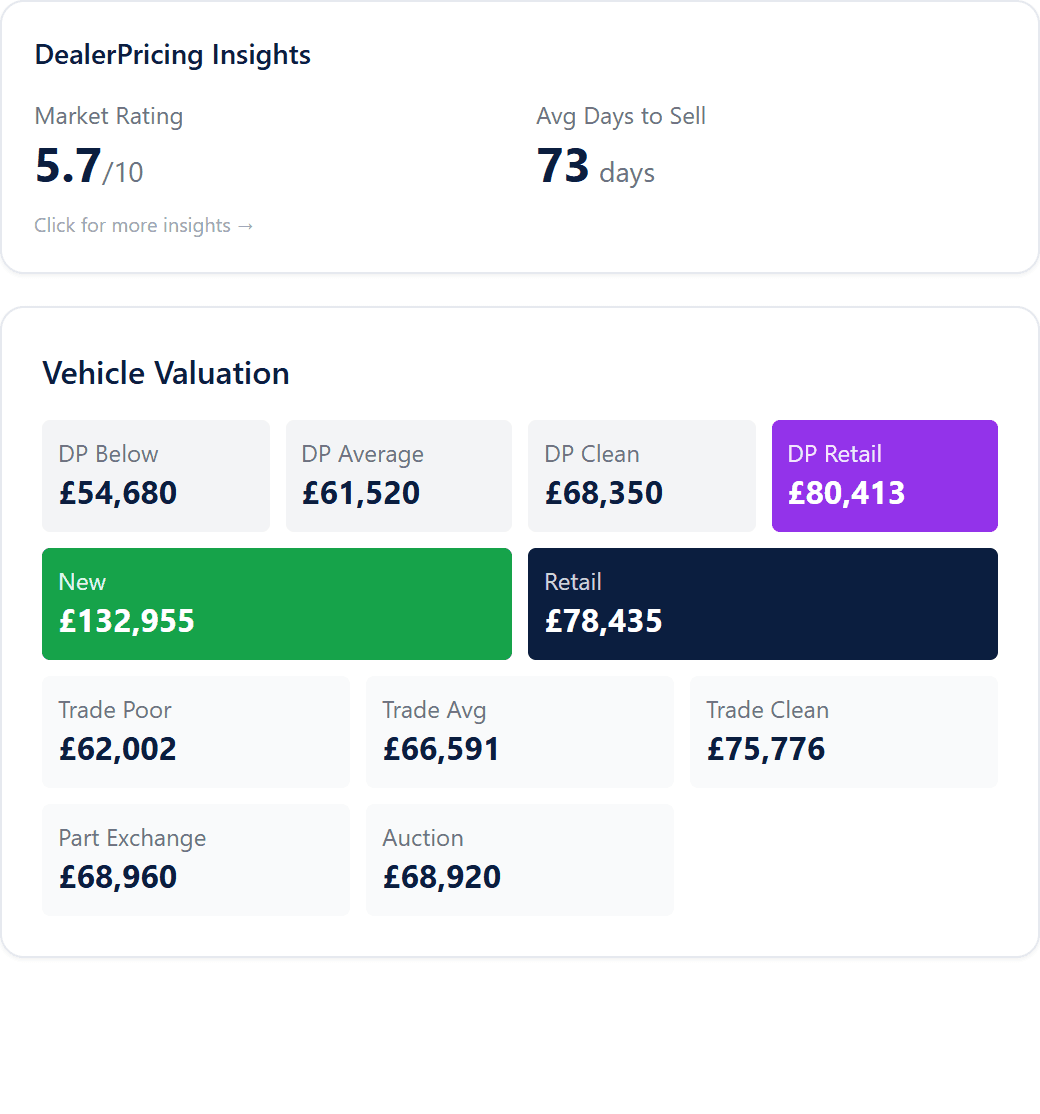
DealerPricing returns three trade figures. Trade Poor is the bid for a car that needs money spent: tyres, bodywork, a service, or with a weak history. Trade Average is the bid for a typical example. Trade Clean is the ceiling for a car that needs nothing but a valet. Decide which band the car sits in before you look at the retail figure, otherwise the retail number tempts you upwards.
The confidence range next to the bands shows how tight the data is. On a Fiesta or Golf it will be narrow. On a low-volume derivative it widens, and that is a signal to open the comparable listings and judge for yourself rather than trust any single figure.
Step 3: check the retail benchmark and the sold prices
DP Retail is the suggested asking price for that car and mileage in today's market. The forecourt Retail figure is the average asking price of comparable cars for sale right now. Then switch the listings to Sold to see what similar cars actually achieved in the last 90 days. Asking prices tell you what competitors hope for; sold prices tell you what buyers paid. If the sold prices sit well below the asking prices, the market is softening and your bid should reflect the sold figure, not the forecourt one.
Step 4: work back to a maximum bid
Put the retail figure into the Retail Price Calculator with your target net profit, expected prep costs and the VAT treatment you will use. Margin scheme is the default for most used cars; VAT-qualifying stock uses the VAT-inclusive or exclusive modes. The calculator returns the maximum you can pay and still hit your target. Compare that figure with the trade band. If the calculator's maximum sits below Trade Average, the car is being retailed too cheaply by your competitors to make your margin, and you should bid low or walk away. The calculator guide covers each setting.
Step 5: adjust for days to sell
Two cars with identical trade values are not identical deals if one sells in three weeks and the other in three months. Every DealerPricing search shows the average days to sell for that model, the number of comparable cars on sale and the share that cleared within 30, 60 and 90 days. A car that averages 75 days to sell ties up capital, attracts price reductions and often ends up sold at Trade Clean anyway. Knock the bid down for slow sellers even when the car itself is clean.
Step 6: run the history check before you commit
Outstanding finance, a Cat S repair or a mileage discrepancy changes a valuation entirely, and none of them show on a free check. A vehicle history check costs £2.50 from a subscriber's balance and searches the PNC and MIAFTR for stolen markers, finance registers, insurance write-off records, plate and colour changes and every MOT mileage reading. Run it before the deposit changes hands, and again before collection if there is a gap, because finance can be registered against a car between the two.
Trade valuation versus guide book values
Printed and online guide books publish a value once a month based on historic trade transactions. They are consistent, which lenders like, but they lag the market by weeks. When used values fell sharply in late 2023, guide values were still above the market for weeks afterwards, and dealers who bid to the book overpaid. A live valuation built from this week's listings and sold prices moves with the market in both directions. The guide book comparison sets out the differences in detail.
A worked example
Take a 2020 Ford Puma ST-Line at 35,000 miles. DealerPricing shows Trade Average of £12,800 with a range of £12,200 to £13,400, a DP Retail of £15,200 and 27 comparable cars for sale averaging 27 days to sell. Sold prices over the last 90 days cluster around £14,900. A dealer targeting £1,200 net profit with £350 of prep and margin scheme VAT gets a maximum bid from the calculator of about £13,100. The car has one advisory and a full history, so Trade Clean is defensible, but the sold data says retail at £14,900 rather than £15,200, which pulls the sensible bid back to £12,800. That is a bid you can explain to anyone.
Frequently asked questions
What is the difference between trade value and retail value?
Trade value is what a dealer pays to buy a car into stock; retail value is what a customer pays on the forecourt. The difference covers preparation, warranty, advertising, finance costs, the risk of the car not selling and the dealer's profit. On a mainstream used car the gap is usually £1,500 to £2,500, wider on slow sellers and prestige cars.
How do dealers value a car at auction?
Dealers value auction stock from the retail price of comparable cars in their area, working back through their target margin and expected prep to a maximum bid. Live tools such as DealerPricing show comparable listings, sold prices and days to sell for the exact registration, so a dealer can set that maximum before the hammer falls rather than guessing in the lane.
Why is my trade valuation lower than the online instant offer?
Instant online offers are marketing figures that are often reduced at inspection, while a trade valuation is the price a trader will actually pay. A dealer's bid also has to fund prep, warranty and the time the car sits unsold. If a car is a slow seller in the current market, the trade value will be lower still, whatever the headline offer said.
Does mileage or condition affect trade value more?
Mileage usually moves the value more because it is measurable and buyers filter by it, so DealerPricing values the car at its actual mileage first. Condition then decides where in the Trade Poor to Trade Clean range the bid should sit. A high-mileage car in clean condition can still be worth less than an average-mileage car needing work.