UK vehicle production falls 11.6% in July 2026
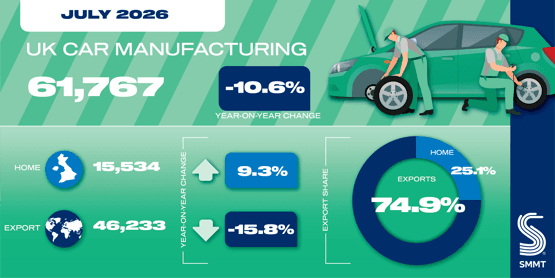
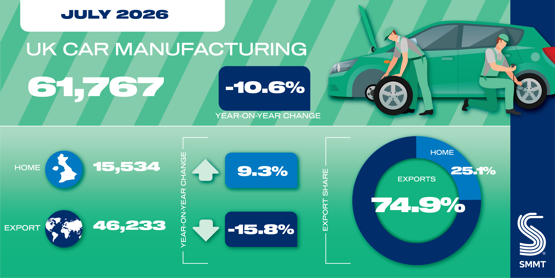
UK car output dropped to 63,655 units in July 2026, a 11.6% fall driven by weaker exports, while electric and hybrid production saw its first monthly rise…
UK vehicle production fell 11.6% in July 2026, with total output dropping to 63,655 units. The decline reflects weaker export demand, a key concern for manufacturers and dealers. Despite the fall, electric and hybrid car output recorded its first monthly increase of the year, signalling a shift in the market.
Key takeaways
- Production fell 11.6% to 63,655 vehicles in July 2026.
- Export weakness was the main driver of the output decline.
- Electric and hybrid output grew, marking the first monthly rise in 2026.
- Overall output remained below pre‑pandemic levels.
Overall production drop in July 2026
The Society of Motor Manufacturers and Traders reported that UK vehicle output contracted by 11.6% in July, reaching 63,655 units. The figure represents a continuation of the downward trend observed since early 2026, when output levels were already below the 2019 peak of around 1.3 million vehicles.
Such a decline reduces the supply pool for used‑car dealers and limits the volume of new‑car stock arriving from manufacturers. Dealers relying on fresh deliveries may need to adjust ordering plans to avoid excess inventory.
Export market weakness
Exports accounted for a smaller proportion of total production in July, with weaker overseas demand cited as the primary cause of the output fall. Major markets such as the EU and the United States showed reduced order books, pressuring manufacturers to cut output.
For dealers, a sustained export slowdown can delay the arrival of fresh models, especially high‑spec variants often allocated to overseas buyers first. This may increase competition for the limited domestic stock that does arrive.
Electric and hybrid output rebounds
Despite the overall contraction, electric and hybrid vehicle production rose for the first month of 2026. The increase reflects growing consumer interest and manufacturers' shift toward low‑emission models to meet future emissions targets.
Dealers with strong EV and hybrid inventories stand to benefit, as the sector continues to attract higher margins and incentive schemes. Maintaining a balanced mix of conventional and electric stock can help hedge against broader production volatility.
What this means for dealers
The fall in total output combined with export weakness suggests tighter dealer supply in the coming months. Dealers should monitor manufacturer allocation updates and consider securing additional stock of electric and hybrid models, which are showing early signs of growth.
Strategic ordering, flexible finance options and targeted promotions for higher‑margin EVs can mitigate the impact of reduced volume, while ensuring competitive pricing for customers seeking new‑car purchases.
Frequently asked questions
Will the July production decline affect used‑car prices?
Lower new‑car supply can lift demand for used vehicles, potentially supporting higher resale values. However, the effect will vary by model, region and the speed at which manufacturers restore output.
How can dealers prepare for ongoing export weakness?
Dealers should stay in close contact with OEMs to understand allocation changes, diversify their sourced models, and prioritize stock that aligns with domestic demand, especially electric and hybrid vehicles that are gaining momentum.