UK New Car Sales Rise 3.4% in January 2026, But Are EV Sales in Trouble?
January saw a 3.4% rise in UK new car registrations, the best start since 2020. However, pure electric vehicle uptake stalled, raising industry alarm over ZEV mandate targets.
UK New Car Market Off to a Strong Start in 2026
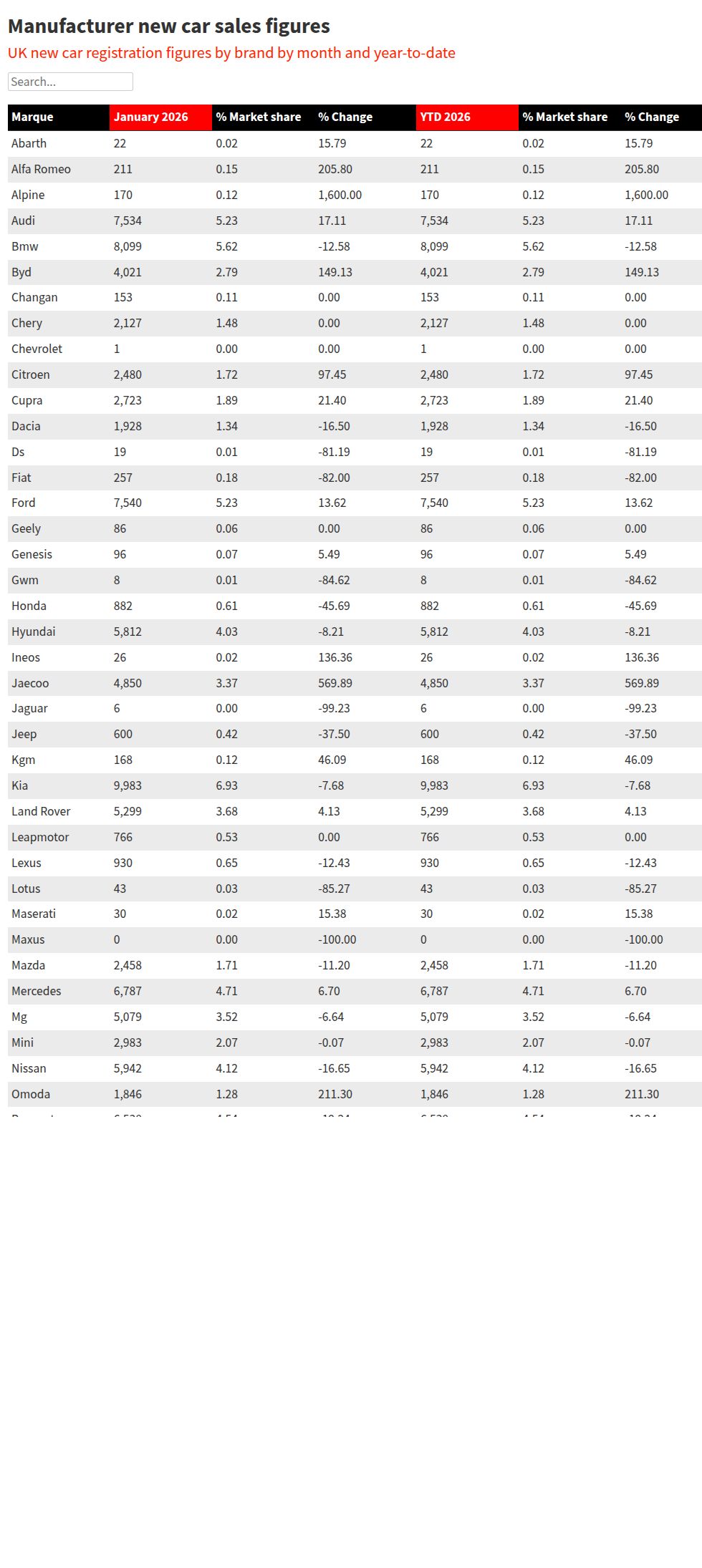
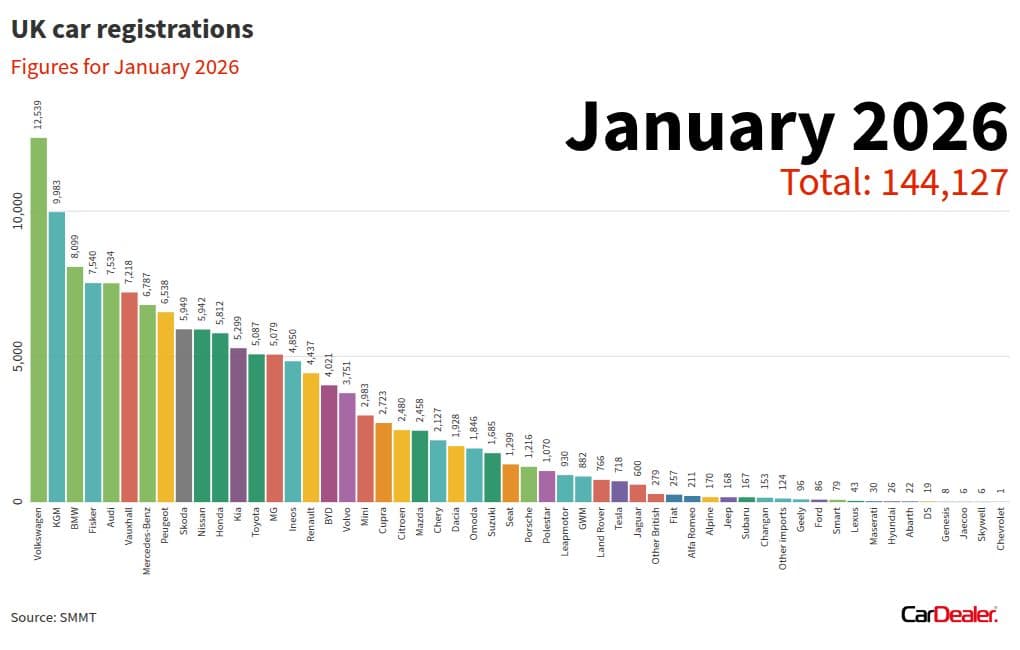
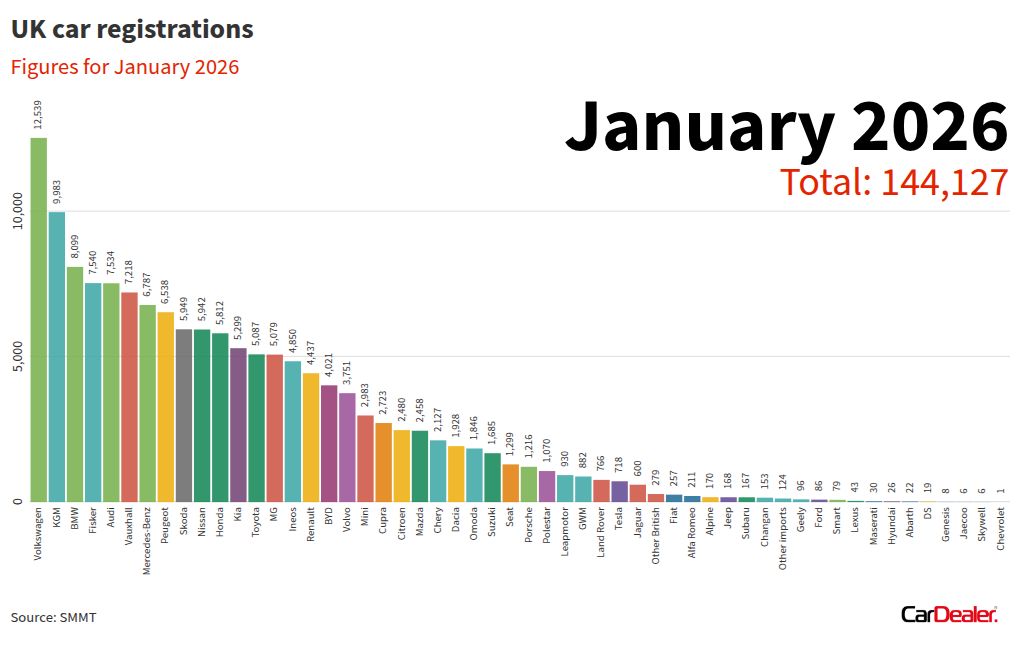
Britain's new car market has enjoyed its strongest January since the pre-pandemic year of 2020, with new car registrations increasing by 3.4% compared to January 2025. According to the latest figures from the Society of Motor Manufacturers and Traders (SMMT), 144,127 new cars were registered last month. This positive growth was witnessed across all buyer types, with private retail sales rising by 4.5%, fleet registrations growing by 1.6%, and business sales (albeit from a low base) surging by 46.5%.
The data confirms that fleets continue to dominate the new car landscape, accounting for a significant 61.2% share of the market. This trend underscores the importance of company car policies and business purchasing power in driving overall market volume.
The Electric Vehicle Conundrum: Stalling Uptake Sparks Concern
Despite the overall market growth, the figures reveal a concerning trend for battery electric vehicles (BEVs). Registrations of new pure electric cars rose by a marginal 0.1% to 29,654 units. This gave BEVs a 20.6% market share, a figure that falls significantly short of the 33% mandated by the government's Zero Emission Vehicle (ZEV) mandate for 2026.
The SMMT attributed the sluggish performance to an unusually strong January 2025, where buyers rushed to purchase EVs before new tax rates were introduced in April of that year. Manufacturers also pushed sales at the end of 2025 to meet annual ZEV mandate targets, which may have pulled some demand forward.
Plug-in Hybrids Lead the Charge in Alternative Fuels
While pure electric sales stalled, plug-in hybrid vehicles (PHEVs) were the standout performers in terms of growth, soaring by 47.3% to capture 12.9% of the market. Hybrid electric vehicles (HEVs) also saw a healthy increase of 4.8%. In contrast, the decline of traditional internal combustion engines continued, with petrol registrations falling by 1.9% and diesel sales dropping by 8.8%.
The SMMT's full-year market outlook remains optimistic, predicting that 2026 will see over 2.048 million new car registrations.
Top-Selling Models and Industry Leadership Response
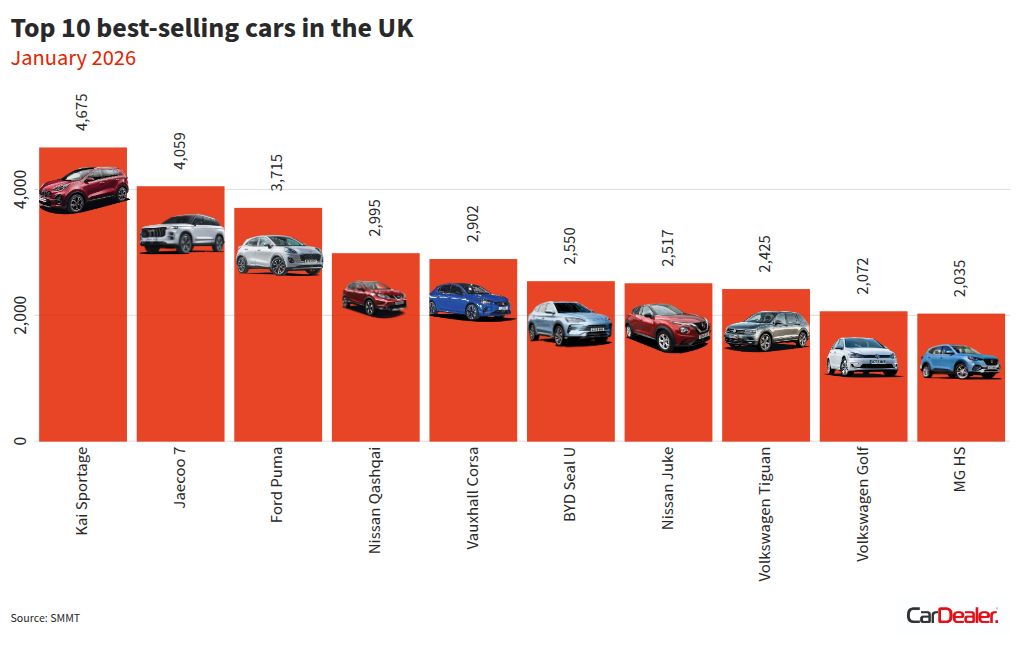
The Kia Sportage was the UK's best-selling new car in January, with 4,675 registrations. It was closely followed by the Jaecoo 7 (4,059) and the ever-popular Ford Puma (3,715).
Mike Hawes, Chief Executive of the SMMT, commented on the results, stating: "Britain’s new car market is building back momentum after a challenging start to the decade. It is also decarbonising more rapidly than ever and, despite a January dip in EV market share, the signs point to growth by the end of the year." However, he issued a strong warning, adding, "The pace of the transition, however, may be slowing and is certainly behind mandated targets. With sales of new pure petrol and diesel cars planned to end in less than four years, there needs to be a comprehensive review of the transition now, to ensure ambition can match reality."
Industry Experts Voice Their Concerns
Market Walking a Tightrope
Philip Nothard, Insight Director at Cox Automotive Europe, described the market as "walking a tightrope." He noted that while BEV volumes rose marginally, they lost market share, leaving a significant gap to the ZEV mandate target. "Progress is being made," he said, "but the gap between policy ambition and market reality remains."
Affordability and Conversion Key Issues
Ian Plummer, Commercial Director at Autotrader, highlighted the "virtually flat performance of the electric market" as an early concern. He pointed out that while interest in EVs is high, conversion to sales is lacking. "Mass electric adoption will need to come from the used market," Plummer argued, "but upfront affordability is the key barrier here so more government support is needed – such as extending the Electric Car Grant to used EVs."
Charging Infrastructure Investment Required
Jamie Hamilton, Automotive Partner and Head of Electric Vehicles at Deloitte, emphasised the critical need for charging infrastructure. He revealed that 79% of intending EV buyers expect to charge at home, with only 12% planning to use on-street or public chargers. "This further emphasises the need for dedicated investment into charging infrastructure," Hamilton stated, "most importantly for those without access to a charger at home."