
Is Re-Refined Engine Oil Suitable for Your Performance Car? A UK Guide
Discover if Motul's NGEN re-refined engine oil meets the demands of your performance or modified car. We analyse API standards, warranty implications and real-world scenarios.
Evaluating Re-Refined Engine Oil for Performance Vehicles
For UK drivers of tuned hot hatches, track-ready monsters, or remapped diesel estates, the emergence of Motul's NGEN Core technology raises an important question: is re-refined engine oil genuinely suitable for performance applications, or is it merely environmental marketing? With engine protection being paramount for modified vehicles, understanding the technical merits of these advanced lubricants is essential for making informed decisions.

Motul's re-refining process transforms used oil into fresh base stocks through vacuum distillation and hydrotreatment, reportedly achieving a 40% carbon saving compared to virgin base oil production. While the environmental benefits are noteworthy, performance-oriented drivers need to know how these oils withstand the extreme conditions encountered in modified engines.
The Demands Placed on Performance Engine Oil
Modern performance and modified engines present significant challenges for any lubricant, regardless of its origin. These include high specific output where substantial power comes from small capacities, resulting in elevated cylinder pressures and temperatures. Turbochargers with fast-spinning shafts can cook oil if it cannot handle heat or coking effectively. Gasoline direct injection (GDI) engines face low-speed pre-ignition (LSPI) risks if the oil's volatility and detergent chemistry are inappropriate. Additionally, manufacturers still expect extended drain intervals even for performance variants.
Any oil—re-refined or conventional—must overcome these challenges while maintaining compatibility with aftertreatment systems like gasoline particulate filters (GPF), diesel particulate filters (DPF), and catalytic converters. This is where industry standards from API, ILSAC, ACEA, and original equipment manufacturer (OEM) approvals become critically important.
NGEN Core and Modern Performance Standards
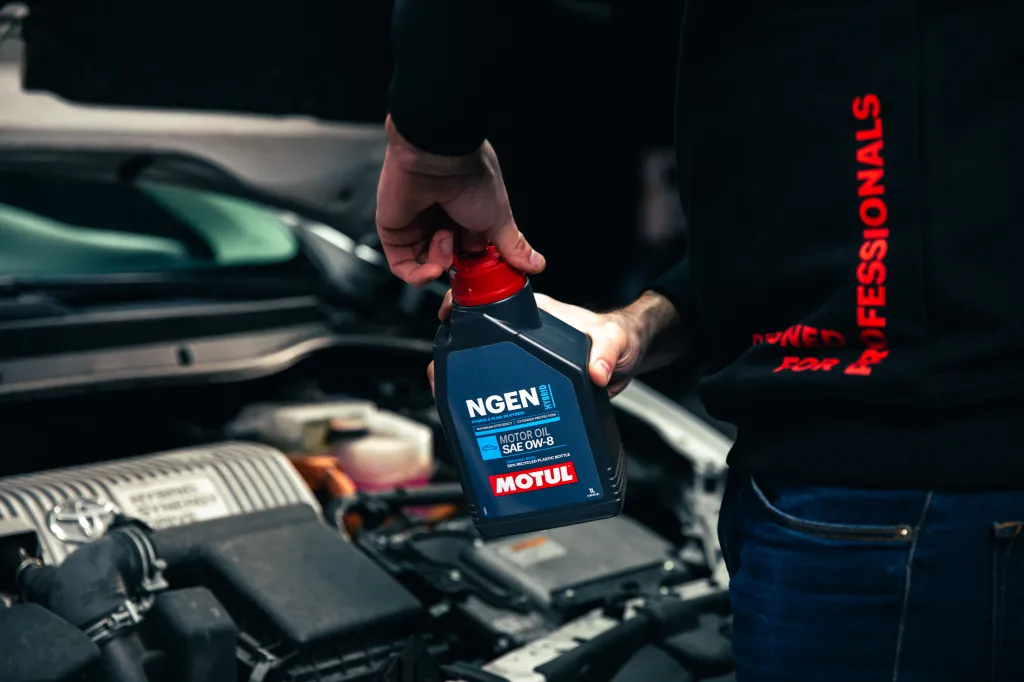
Motul states that NGEN Core products meet current industry standards, including the latest API SP specification. This standard specifically addresses the needs of today's high-output petrol engines, with test requirements focused on reducing LSPI and timing chain wear while protecting turbochargers. This makes API SP compatibility particularly relevant for turbocharged GDI engines found in vehicles like the VW EA888, Ford EcoBoost, and Hyundai N-series—engines frequently subjected to part-throttle, low-rpm boost conditions where LSPI typically occurs.
If a NGEN passenger car grade lists API SP and the appropriate ILSAC or ACEA category on its data sheet, and your vehicle handbook permits oil selection based on these specifications (common with Toyota, Honda, Hyundai, and Kia models), it can be considered alongside conventional synthetics meeting identical standards. The backwards compatibility of API SP means it's also suitable for older vehicles requiring previous API standards.
Matching Re-Refined Oil to Your Performance Engine
Consult Your Handbook First
Your vehicle's owner's manual typically specifies both a viscosity grade (such as 0W-20, 0W-30, or 5W-30) and either global specifications (API, ILSAC, ACEA) or OEM-specific standards. Many Asian manufacturers use language like "Use SAE 0W-20, API SP or higher, ILSAC GF-6B or higher" rather than naming proprietary approvals. In these cases, a Motul NGEN product matching the stated specifications represents a viable option, subject to Motul's guidance.
When handbooks insist on specific OEM codes without permitting alternatives—more common with European marques—these requirements should be treated as mandatory. NGEN passenger car products currently have limitations in this area, though Motul is reportedly developing solutions.

Assess Your Driving Style
Your usage pattern significantly influences oil suitability. For fast road use or mildly tuned vehicles, a correctly specified NGEN Core oil meeting API/ILSAC requirements should perform adequately, provided oil temperatures remain sensible and you adhere to recommended (or slightly shortened) drain intervals.
For track days or regular hard use, you might prefer a higher high-temperature, high-shear (HTHS) viscosity (often listed for "severe" use in manufacturer recommendations) with reduced change intervals. For extreme power builds exceeding OEM intentions, engine builders should select oil based on bearing clearances, temperature/pressure data, and experience. In these cases, dedicated competition oils like Motul's 300V or 8100 Power ranges might be more appropriate than NGEN products.
Real-World Application Scenarios
Scenario 1: Toyota GR Yaris Daily Driver – NGEN 6
For a UK driver using a Toyota GR Yaris as both daily transport and B-road toy, the handbook typically specifies low-viscosity oil (such as 0W-20) meeting API and ILSAC specifications suitable for its turbocharged three-cylinder engine. Since viscosity and API/ILSAC levels—not proprietary OEM codes—are the primary factors, a NGEN product matching these specifications represents a sound choice. For occasional spirited driving, protection should comparable to conventional premium synthetics with identical certifications, assuming proper warm-up procedures and sensible change intervals.
For more extreme mapping, increased boost, or regular track use, monitoring oil temperature and pressure remains essential regardless of oil type, with conservative service intervals recommended.
Scenario 2: Subaru Impreza Track Car – NGEN 4
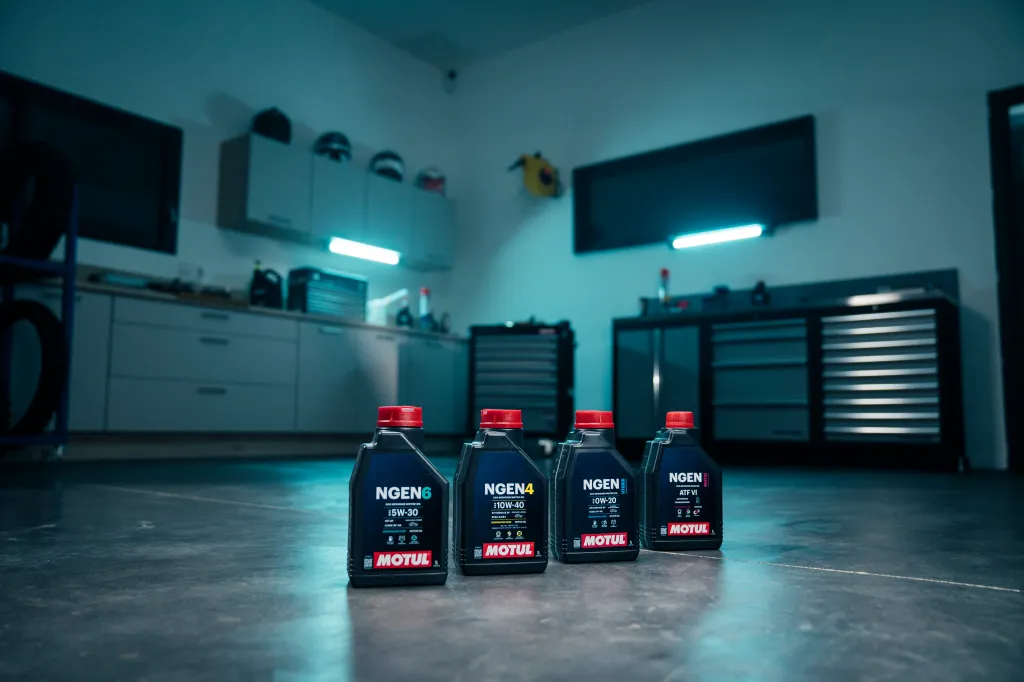
Mid-2000s Japanese performance cars like the Subaru Impreza WRX STI or Mitsubishi Lancer Evo, now serving as primarily track vehicles, align well with NGEN 4's intended application. Handbooks from this era typically specify 5W-40 or 10W-40 oil meeting API SL/SM and ACEA A3/B4 categories. Since API SP is backwards compatible, NGEN 4 meets or exceeds these earlier requirements.
For track-focused use, proper engine warm-up, appropriate viscosity selection, and shortened change intervals relative to road use are recommended practices that apply regardless of oil type. NGEN 4 allows combining performance with sustainability benefits for these applications.
Scenario 3: Hybrid Daily Driver – NGEN Hybrid
Hybrid and mild-hybrid vehicles subject oils to unique stresses from constant engine cycling. NGEN Hybrid addresses these demands with formulations specifically designed for start-stop operation, short load cycles, and extended service intervals. For vehicles like the Toyota C-HR Hybrid or Honda Jazz Hybrid, where handbooks specify API/ILSAC profiles and low-viscosity oils for fuel economy, NGEN Hybrid represents a suitable option when matching the required specifications.
Warranty Considerations and Peace of Mind
From a warranty perspective, compliance with handbook specifications remains paramount. If your manual specifies "use API SP, ILSAC GF-6B, 0W-20" and a NGEN product matches these requirements, you're technically compliant—though keeping receipts and data sheets is advisable. When handbooks demand specific OEM approvals without alternative options, waiting for NGEN products with those approvals is recommended.
Motul positions NGEN Core as a premium sustainability technology rather than a budget option, leveraging its reputation for innovative lubricant development. For high-value or heavily modified vehicles, consulting with your tuner or engine builder while reviewing current data sheets provides maximum confidence.
Final Verdict: Should You Use NGEN in Your Performance Car?
If your performance or modified car's handbook permits oil selection based on API/ILSAC specifications rather than rigid OEM codes, and you can identify a Motul NGEN grade matching your required viscosity and certification levels, there's no technical reason to avoid re-refined oil solely based on its origin. This approach delivers equivalent performance with enhanced sustainability—a rare combination in the automotive world.
For 1990–2009 performance vehicles aligning with NGEN 4's approvals, the fit is particularly appropriate, blending nostalgic performance with modern circular-economy technology. However, for newer European models requiring specific OEM approvals or extreme track builds with specialised hardware, sticking with oils meeting those demanding specifications remains advisable until NGEN expands its approval portfolio.