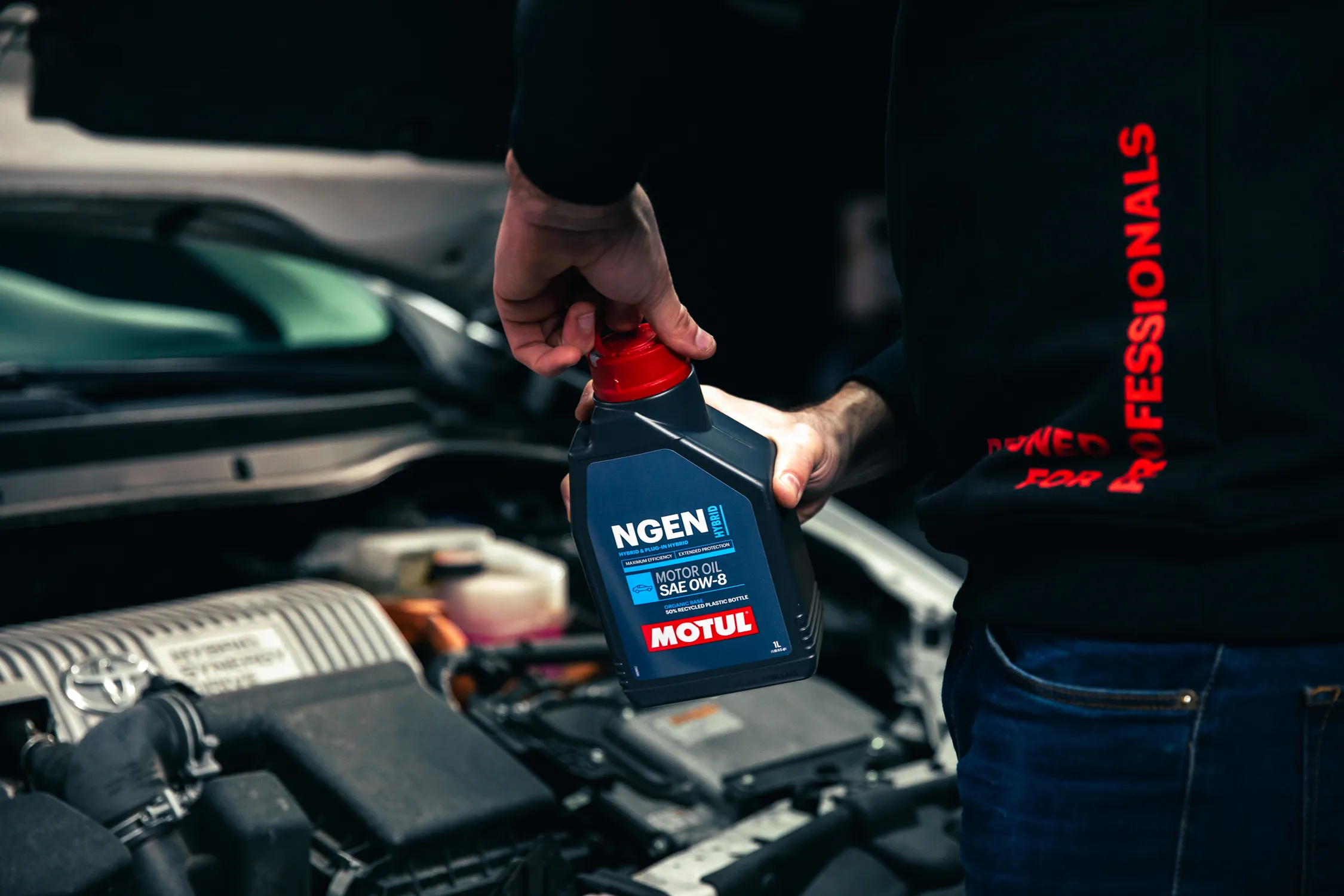
Is Re-Refined Engine Oil as Good as Conventional? Motul's NGEN Core Explained
Discover how Motul's NGEN Core re-refined engine oil offers high-performance lubrication while reducing environmental impact. Is it safe for your car? Find out here.
What Is Re-Refined Engine Oil? Inside Motul’s NGEN Core Tech
If your idea of re-refined engine oil involves basic filtration of old sump sludge, then it’s time to reconsider. This technology represents a significant advancement in lubrication, and Motul’s NGEN Core system is leading the charge. For UK motorists who prioritise both performance and sustainability, understanding re-refined oil is becoming as crucial as knowing your ACEA and API specifications.
What exactly is re-refined engine oil?
In simple terms, re-refined engine oil is lubricant produced from used oil that has undergone intensive processing to become high-quality base oil. This is then blended with fresh additives to meet the exacting standards of conventional premium lubricants.
Used oil collected from garages, dealers, and waste contractors is treated as a valuable raw material instead of hazardous waste destined for disposal. In the UK, waste oil is classified as hazardous, requiring strict handling procedures. This regulatory framework makes re-refining particularly attractive, transforming a disposal challenge into a circular resource.
The fundamental difference between modern re-refining and outdated recycling methods is substantial:
- Old stereotype: Basic filtering to remove large particles, possibly de-watering, resulting in a lower-grade product.
- Modern reality: A multi-stage industrial process involving distillation, hydrotreatment, and fine filtration to eliminate contaminants and produce a clean base oil that meets contemporary performance standards.
Motul refers to these re-refined base oils as "RRBO" and uses them as the foundation for its NGEN Core product line.

The transformation process: From waste oil to NGEN base stock
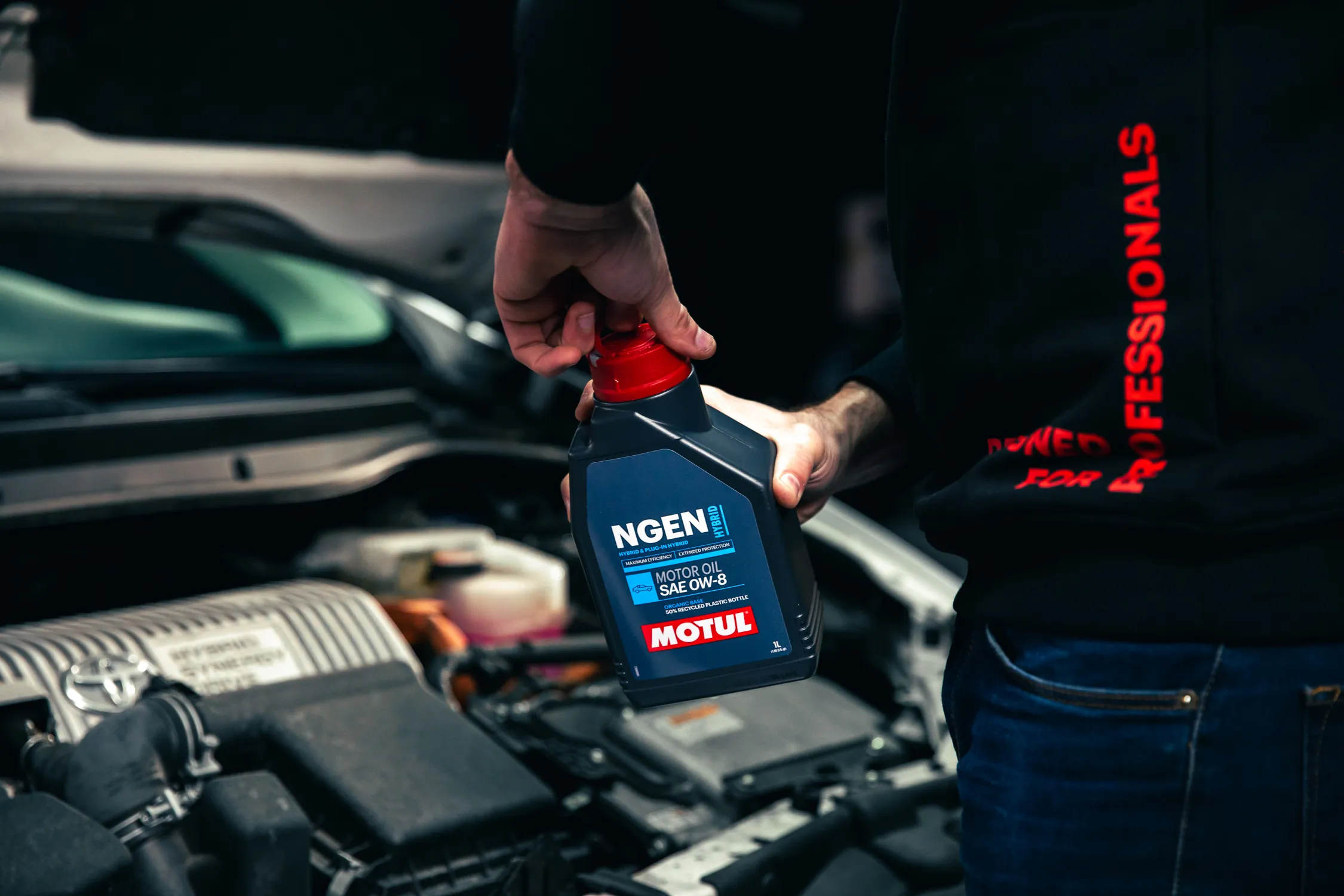
What exactly happens to transform used oil into the NGEN product on the shelf? While Motul doesn't disclose its full proprietary process, the general steps are as follows:
- Collection and Pre-treatment: Used oil is gathered, consolidated, and screened to remove obvious contaminants like coolant, fuel, water, and solids.
- De-watering and Separation: Water and light volatiles are removed under controlled conditions, while heavy residues such as metal particles and degraded additives are separated out.
- Vacuum Distillation: The oil is distilled under vacuum into different fractions, a crucial step where old additive chemistry and contaminants are stripped away.
- Hydrotreatment / Hydrofinishing: The distilled fraction is treated with hydrogen under high pressure and temperature, saturating hydrocarbon chains, removing impurities, and enhancing stability and colour.
- Quality Control: The resulting base oil is rigorously tested against standard criteria like viscosity index and oxidation stability, and categorised for different viscosity grades.
- Blending with Fresh Additives: Only after these steps are new additive packages blended in to achieve targeted API, ACEA, and OEM performance levels.
As Motul’s UK and Ireland boss, Andy Wait, emphasised, this is a "complex multi-stage process… certainly not simply ‘recycled oil’".
Performance: Does re-refined oil match conventional lubricants?
The short answer is yes – it must meet the same standards to reach the market.
NGEN Core lubricants are formulated to comply with current specifications such as API SP, which addresses low-speed pre-ignition (LSPI), protects timing chains, and suits modern, highly-stressed downsized petrol engines. Oils meeting API SP are also backwards compatible with older requirements. In Europe, passenger car lubricants must align with ACEA Oil Sequences (e.g., C3, C5, C6), which dictate performance for fuel economy, aftertreatment compatibility, and long-drain stability.
Motul states that NGEN Core products undergo extreme condition testing and deliver "uncompromising performance," with RRBOs offering purity and performance at least equal to virgin base oils. The key is to verify that the technical data sheet for a specific NGEN grade confirms the necessary API/ACEA claims.
Real-World Application
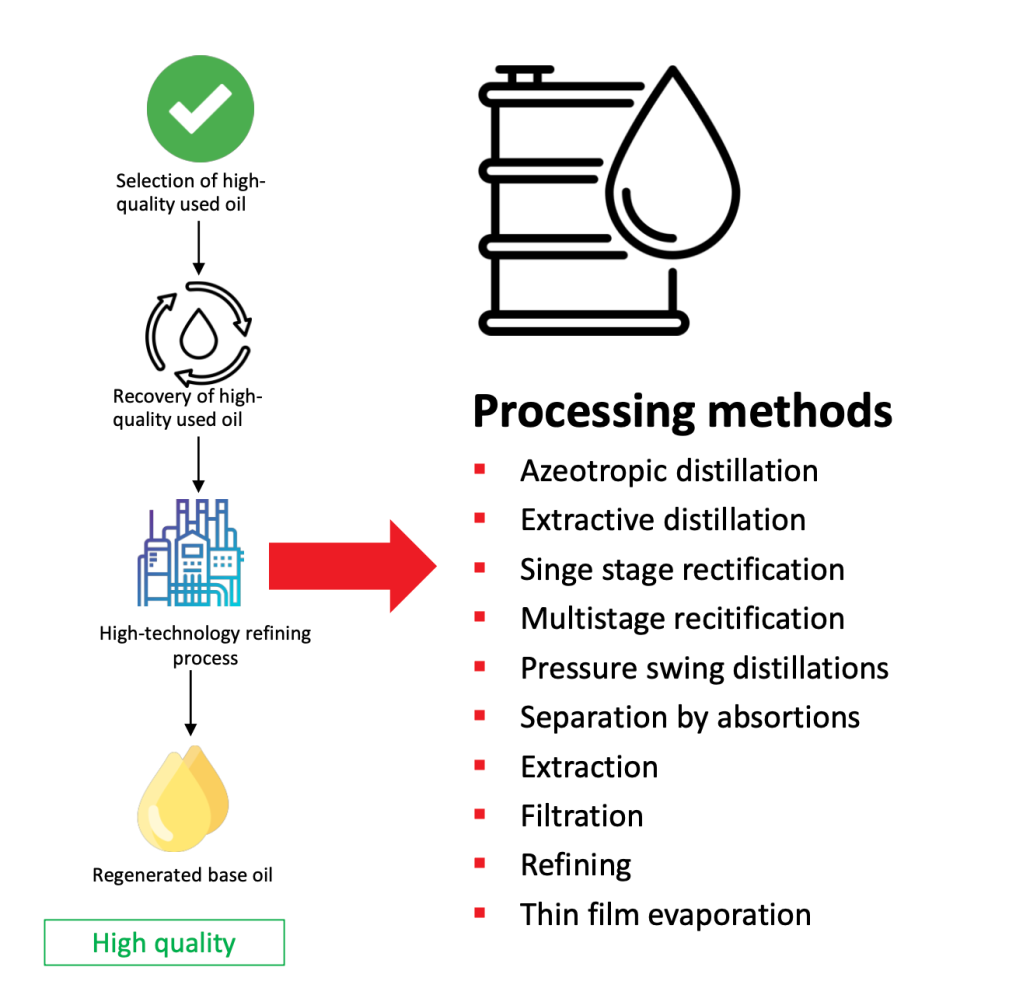
Consider a modern turbocharged engine, like the one in a Toyota GR Yaris, which requires a low-viscosity oil meeting specific API and ILSAC standards. If a Motul NGEN product is blended to the same specifications and correct viscosity, and the manufacturer permits oils chosen on that basis, the engine will receive equivalent protection. The crucial step is always cross-checking the product data sheet against the vehicle handbook before making a switch.
Why re-refined engine oil matters for UK motorists
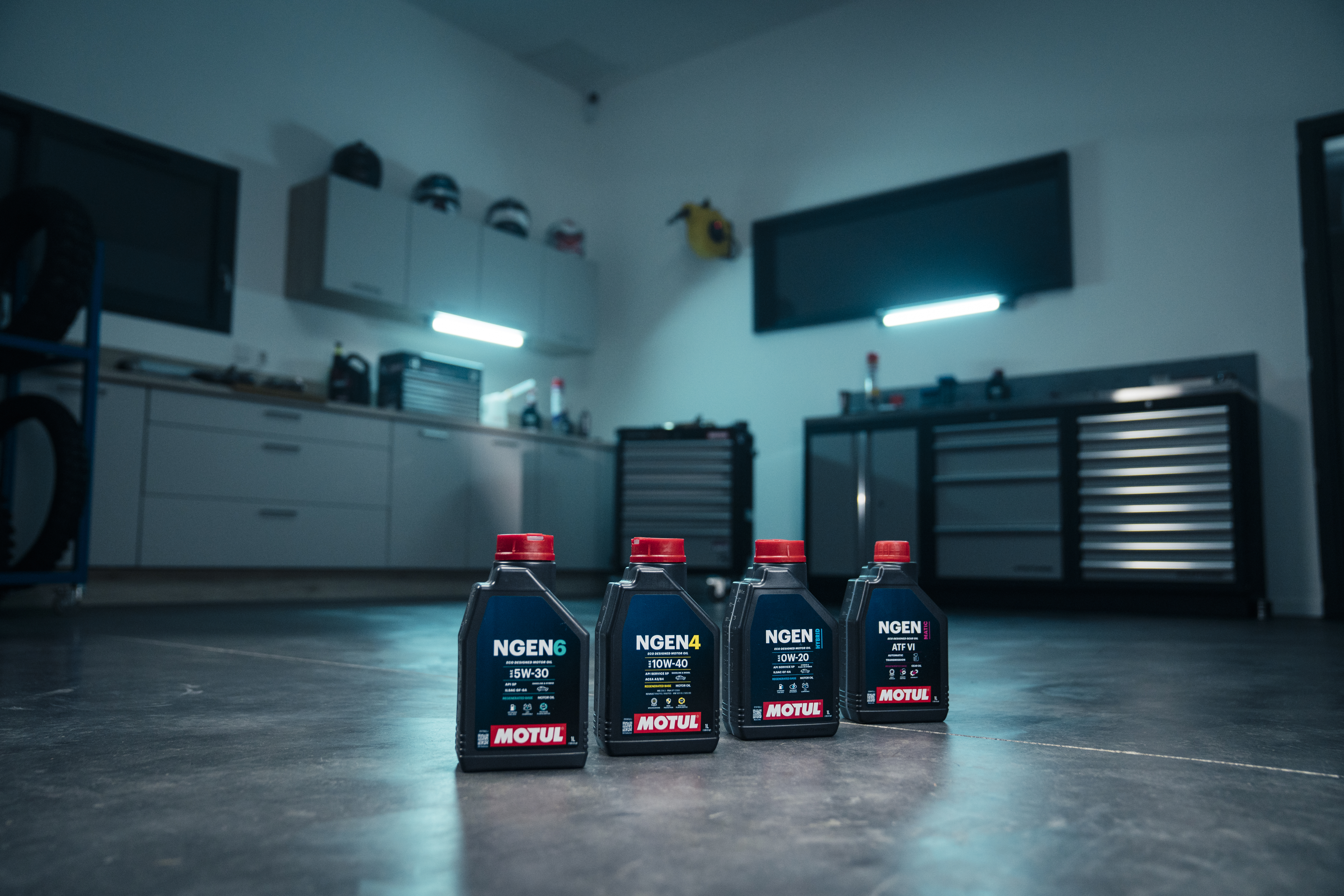
The benefits extend beyond engine oil; Motul has also launched a re-refined transmission fluid (NGEN ATF VI). For UK drivers, there are three significant reasons to consider this technology:
- Reduced Carbon Footprint: Motul reports that RRBO-based products cut carbon emissions by approximately 40% compared to those using solely virgin base oils.
- Waste Management and Circular Economy: High-quality re-refining keeps valuable carbon in circulation, offering a better solution than burning waste oil as low-grade fuel.
- Packaging and Plastic Waste: NGEN Core uses bottles made from 50% post-consumer recycled plastic, with an aim to reach 75% by 2027.
With increasing focus on UK clean-air zones and workshop waste management, this shift is likely to become the standard.

Motul's NGEN product strategy
Motul introduced its circular approach in 2023 with NGEN 5 and NGEN 7 for motorcycles, followed by automotive products NGEN 6, NGEN 4, and NGEN Hybrid. The NGEN Core label now serves as the umbrella for all products using these re-refined base oils, with motorcycle lines scheduled to adopt the branding from 2026.
The brand describes NGEN Core as "making sustainability a natural dimension of performance," indicating that consumers should not have to sacrifice protection or service intervals for environmental benefits. The plan is to extend this technology across passenger car motor oils and other lubricants.
Is re-refined engine oil safe for your car?
Re-refined engine oil is not a budget alternative; Motul's NGEN Core involves fully engineered base stock subjected to rigorous laboratory testing. Provided a specific NGEN product meets the API, ACEA, and OEM specifications required for your vehicle – which should always be confirmed first – it should perform identically to high-quality synthetic oils, while offering a significantly lower carbon footprint. The ultimate consideration is whether the product is fit for your vehicle's specific requirements.