How Chinese Car Brands Are Disrupting the UK Market: A 20% Share by 2030?
Chinese car brands captured 10% of the UK market in 2025. Experts predict this could double by 2030, reshaping the automotive landscape. What does this mean for buyers?
The Rise of Chinese Car Brands in the UK
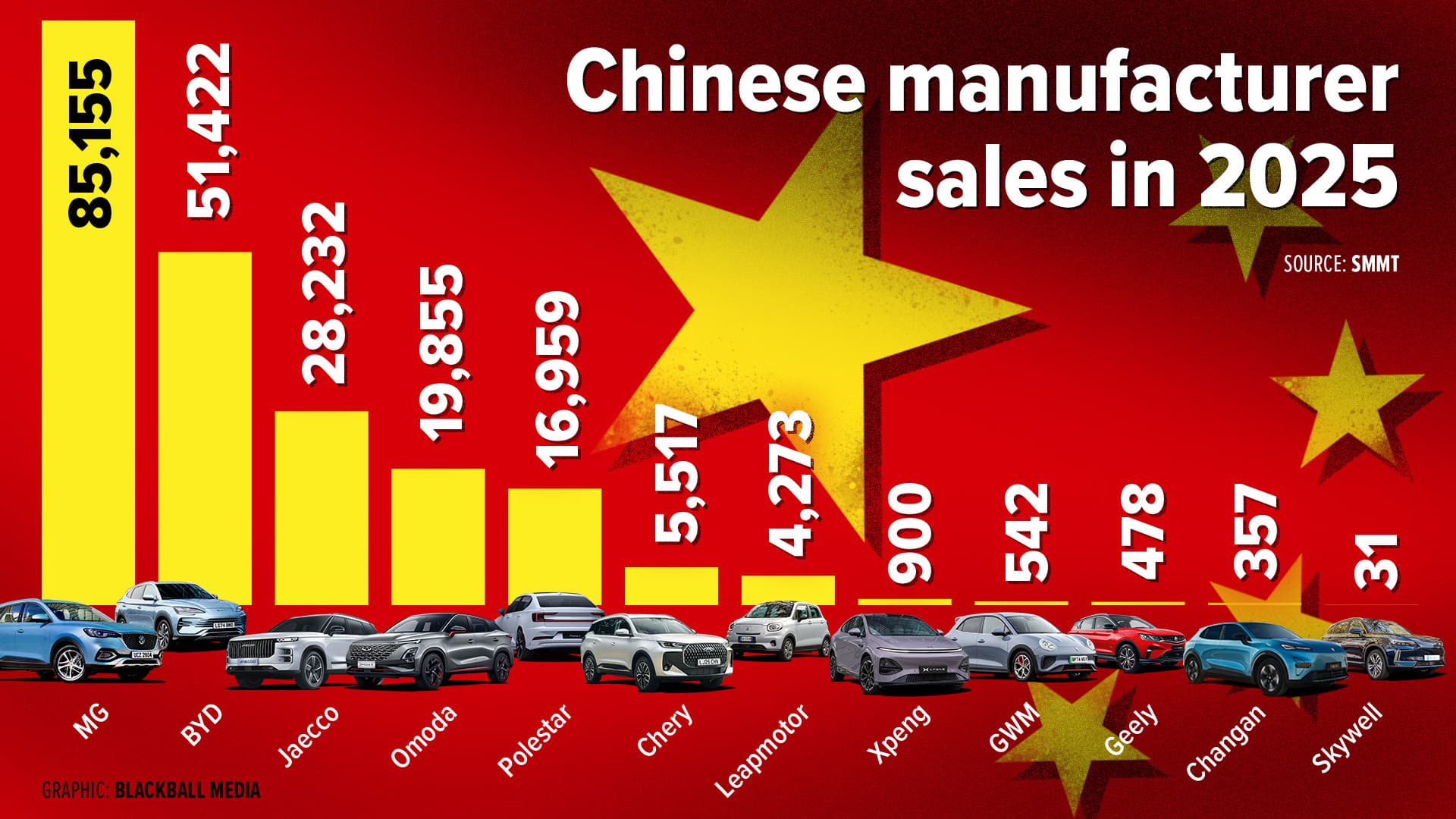
The UK car market is undergoing a seismic shift, driven by the aggressive expansion of Chinese automotive manufacturers. In 2025, these challenger brands achieved a remarkable milestone, securing a 10% market share with over 111,000 units sold. This rapid growth from a near-standing start signals a fundamental change in British car buying habits.
Unprecedented Market Penetration
New entrants like BYD, Omoda, and Jaecoo have seen sales skyrocket as consumers increasingly seek out low-priced motoring and reconsider their allegiance to traditional heritage brands. The pace of this expansion is staggering when compared to established players. Analysts predict this is just the beginning. Steve Young of automotive research firm ICDP suggests that Chinese brands could collectively achieve a higher market share than Japanese or Korean manufacturers, potentially reaching 20% by 2030.
This growth is not expected to come from an expanding overall market. Instead, Chinese brands are poised to secure customers directly from legacy manufacturers. Some industry insiders describe the coming competition as a potential 'bloodbath' for traditional brands. The success of these new players is rooted in their ability to 'rip up the rule book,' according to one dealer group boss who has invested heavily in Chinese partnerships. Their relaxed approach to dealership standards and remarkable operational speed have allowed them to create vast dealer networks in a fraction of the time it took established brands.
Speed to Market: A Comparative Analysis
The velocity of this market penetration is historically unprecedented. To put it in perspective, Hyundai took over 27 years to achieve a 2% market share in the UK, Kia nearly 18 years, and MG around 12 years. In contrast, BYD managed the same feat in just two years, while Omoda and Jaecoo achieved it in a mere nine months. Official SMMT figures reveal the scale of this success: BYD sold 51,000 cars in 2025, securing a 2.5% market share, while Omoda and Jaecoo combined for 48,000 sales and a 2.4% share—an incredible achievement considering Jaecoo only launched in January of that year.
Outpacing Established Rivals
Chinese manufacturers are now consistently outselling well-known brands like Honda, Seat, Mini, Suzuki, and Fiat. According to Autotrader, by the end of 2026, consumers could have around 80 car brands to choose from, a significant increase from just 50 in 2019. Marc Palmer, an insights expert at Autotrader, notes that Chinese brands "doubled volume and doubled share in the space of 12 months. That kind of speed is almost unheard of in the UK car market."
Why Are UK Consumers Choosing Chinese Cars?
The appeal of Chinese brands boils down to a powerful combination of value, technology, and timing. These new models are typically packed with advanced technology, feature modern designs, and are available at a fraction of the price of established rivals. Many are offered with incredibly low deposits and affordable monthly payments, arriving at a time when prices from traditional manufacturers have soared.
The Value Proposition
Chinese manufacturers have been able to offer customers on three-year finance deals a similar model to what they're accustomed to, but for the same or lower monthly fee—something traditional brands struggle to match. Peter Smyth, director of car dealer group Swansway, which has added BYD, Omoda, and Jaecoo to its portfolio, observes that customers are "surprised by the quality—and then they're blown away by the technology. In many cases, the Chinese product is two generations ahead of some of the legacy manufacturers."
This dynamic has been compared to the disruption seen in the supermarket sector. As one dealer explained, "It's like the Aldi and Lidl analogy—if you can get M&S-like quality at a fraction of the price, consumers will lap it up." Buyers appreciate getting a bargain without feeling shortchanged, often finding the technology superior to German rivals.
Changing Consumer Loyalty
Traditional car makers historically banked on brand loyalty, but they're rapidly learning that British consumers are increasingly motivated by value. Autotrader data shows that one in four of all new car leads it sent to dealers last year was for a challenger brand. Furthermore, consumers are increasingly cross-shopping Chinese brands with established names like Ford, Volkswagen, and Hyundai.
Marc Palmer from Autotrader adds: "Early on, they were being compared largely with one another—but the new entrant brands have established themselves very quickly in competitor sets, not just against mid-range brands, but now against Volkswagen in reasonable strength. We're starting to see cross-shopping against really well-known brands and retailers are seeing part-exchanges coming in from established marques."
Future Challenges and Market Impact
While the growth trajectory is impressive, questions remain about the long-term viability of these brands. Despite offering long warranties, their reliability in the UK is largely untested, as is access to parts. The larger question concerns their performance in the used car market. Will consumers want them in large numbers second-hand? What residual values will they command? And what impact will a potential glut of cheaper used Chinese cars have on overall used car values?
The 'China Speed' Advantage
A significant factor in their success is what industry observers call 'China Speed'—the remarkable pace at which these companies operate. This agility has taken the UK market and its established manufacturers by surprise. The quality of their initial product, combined with the speed of iteration and renewal, is striking. As Palmer notes, "They're bringing cars into market very, very quickly—China Speed is in the UK for sure."
This speed is supported by advantageous conditions back home. Chinese brands benefit from access to cheap capital and political support for overseas expansion. The UK represents an incredibly profitable market, with cars often selling for far more than they retail for in China. As Peter Smyth discovered on a trip to China, a car sold for £35,000 in the UK was priced at less than $17,000 there, indicating substantial margin flexibility that could be crucial if future governments impose tariffs.
While not every Chinese brand will achieve lasting success, their impact on the British car market is undeniable. With ambitious goals—BYD reportedly aims to become the number one best-selling brand in the UK—and a fundamentally different approach to market targeting, Chinese manufacturers are not a passing fad. They are reshaping the landscape of British car buying, potentially for good.