
Ford Escort RS Turbo Series 2: The Stolen-and-Rebuilt 400bhp British Icon
Discover how Chris Rose's stolen Ford Escort RS Turbo Series 2 was rebuilt into a 400bhp masterpiece. Learn about the Zetec conversion, theft recovery and modern upgrades.
The Ultimate Ford Escort RS Turbo Resurrection Story
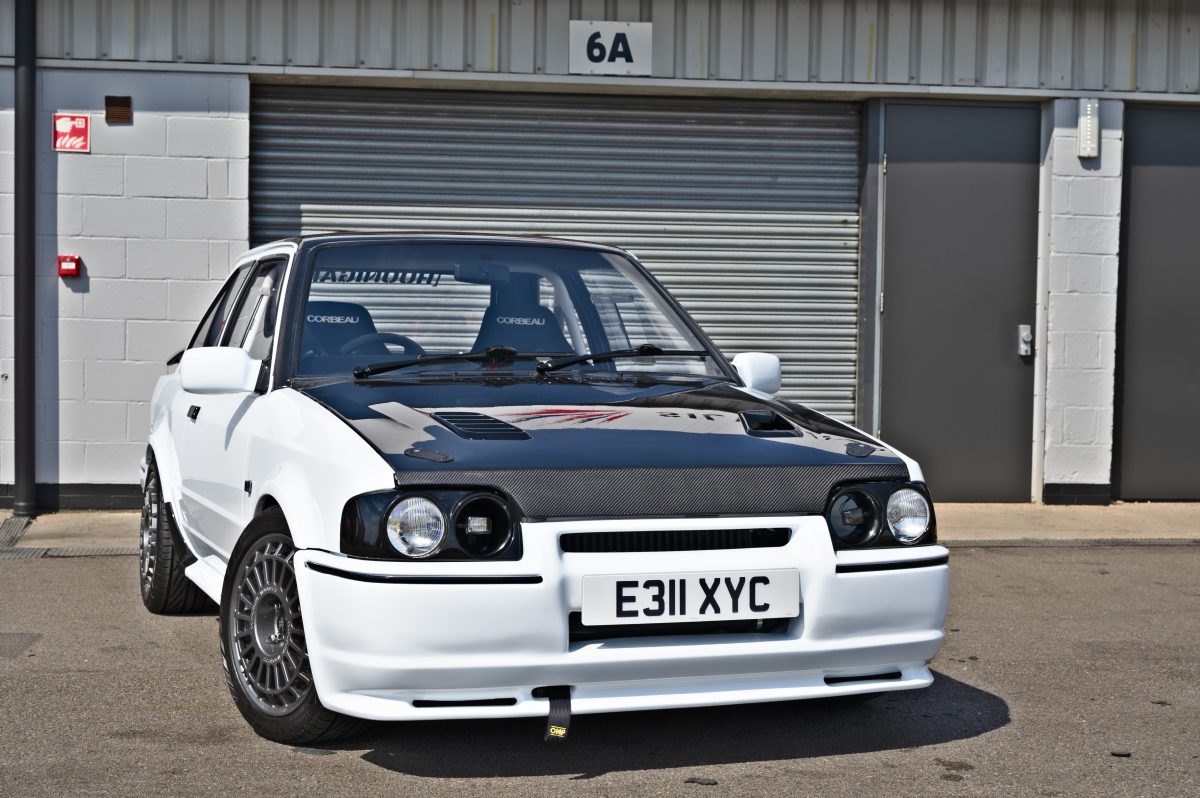
Some project cars undergo one major rebuild during their lifetime. Chris Rose's Ford Escort RS Turbo Series 2 has endured two complete reconstructions. Since acquiring the vehicle in 2008, this iconic British hot hatch has transformed from a Southend cruiser into a nearly 400bhp modernised classic that perfectly blends old-school Ford attitude with contemporary engineering excellence.
Why the Escort RS Turbo Series 2 Remains a British Icon
Few vehicles command the same street-level legendary status as the Escort RS Turbo Series 2. Produced during the late Mk4 Escort era, these turbocharged models have become cult favourites among fast Ford enthusiasts. Chris's example demonstrates exactly why these vehicles continue to captivate enthusiasts decades after their production ended.
A Build That Refused to Die
The car initially remained relatively standard for several years before modifications began. The first significant upgrade involved a fifth injector setup on the original 1.9-litre CVH engine, boosting output to approximately 230bhp. After experiencing engine failure during straight-line testing, Chris made the pivotal decision to transition to a 2.0-litre turbocharged Zetec blacktop engine - a move that would fundamentally transform the vehicle's character and performance.
This initiated the first major build phase, with Chris applying over two decades of professional body repair, welding and fabrication experience from his career as a bus engineer. This wasn't a simple bolt-on modification project but a comprehensive, ground-up restoration that took years to complete.
The Devastating Theft and Remarkable Recovery
The project suffered a catastrophic setback when the car was stolen from Chris's garage. Although recovered following a social media campaign, the vehicle returned in a severely damaged condition. Identification numbers had been ground away, the floor panel was cut, the rear end sustained significant damage, panels were scratched, and the engine was completely destroyed.
Faced with what many would consider a terminal situation, Chris embarked on a second complete rebuild. The shell underwent extensive repairs, bodywork was completely redone, and the rear section was carefully restored to its original shape. The engine was rebuilt by CTM in Dagenham, with the entire package refreshed and enhanced beyond its previous specification.
Zetec Turbo Conversion: Modern Power for Classic Ford
Why the Zetec Swap Transformed Everything
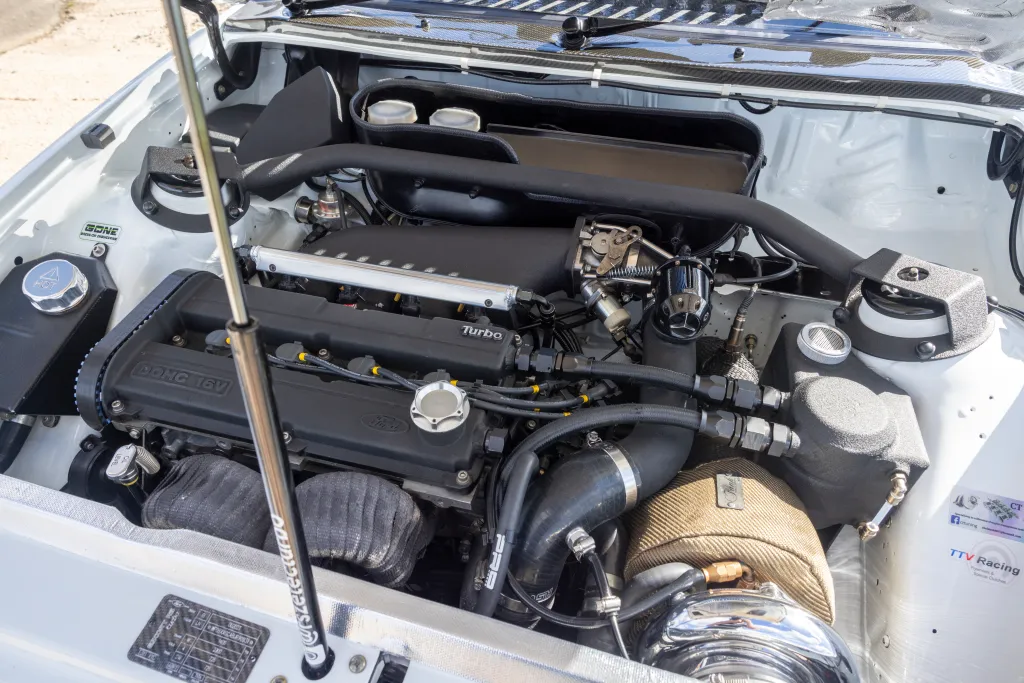
The transition to a 2.0-litre blacktop Zetec engine from a Focus donor vehicle represented a significant upgrade over the original CVH unit. Chris selected a silver-top rocker cover instead of the standard plastic blacktop version, allowing for cleaner breather modifications and improving the engine bay's appearance.
Performance Specifications and Engineering Excellence
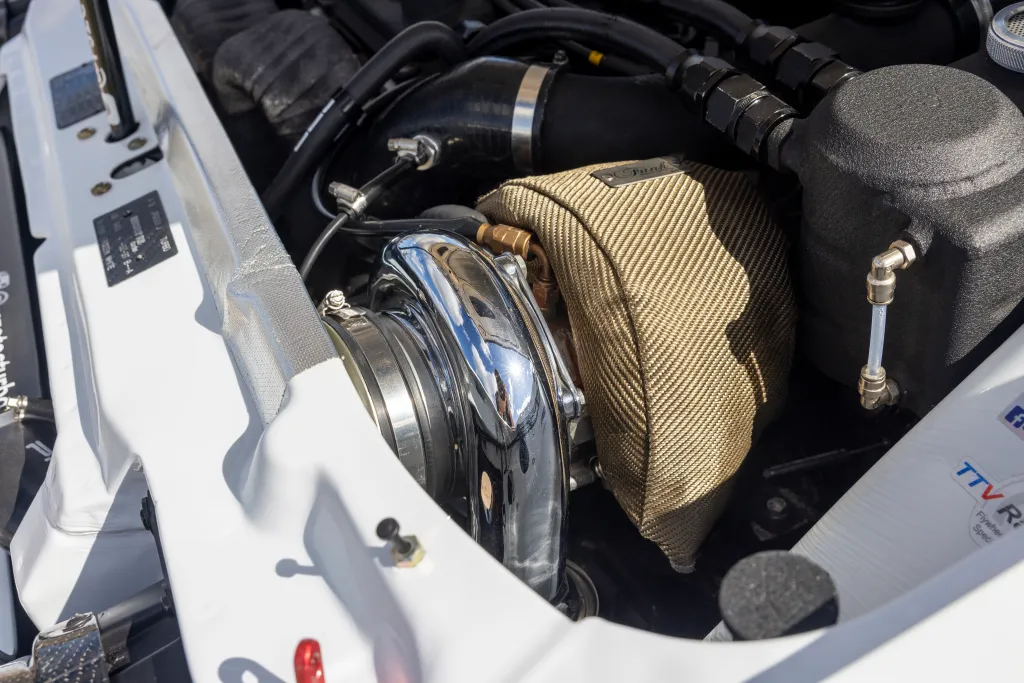
The engine specification includes a Garrett GT2876R roller-bearing turbocharger, forged pistons, Eagle connecting rods, custom fuel tanks and a fabricated plenum setup. The manifold was sourced from the United States, while Greenon Engineering produced the tanks and Crazy Cage Fabrications supplied the plenum.
This comprehensive package generates just under 400bhp on the dyno - an impressive figure for a vehicle weighing approximately 850kg. The engine bay features a crackle-black finish with powder-coated details and fabricated components that create a professional appearance while maintaining the vehicle's usable character.
Chassis, Braking and Weight Reduction
Serious Stopping Power and Handling Upgrades
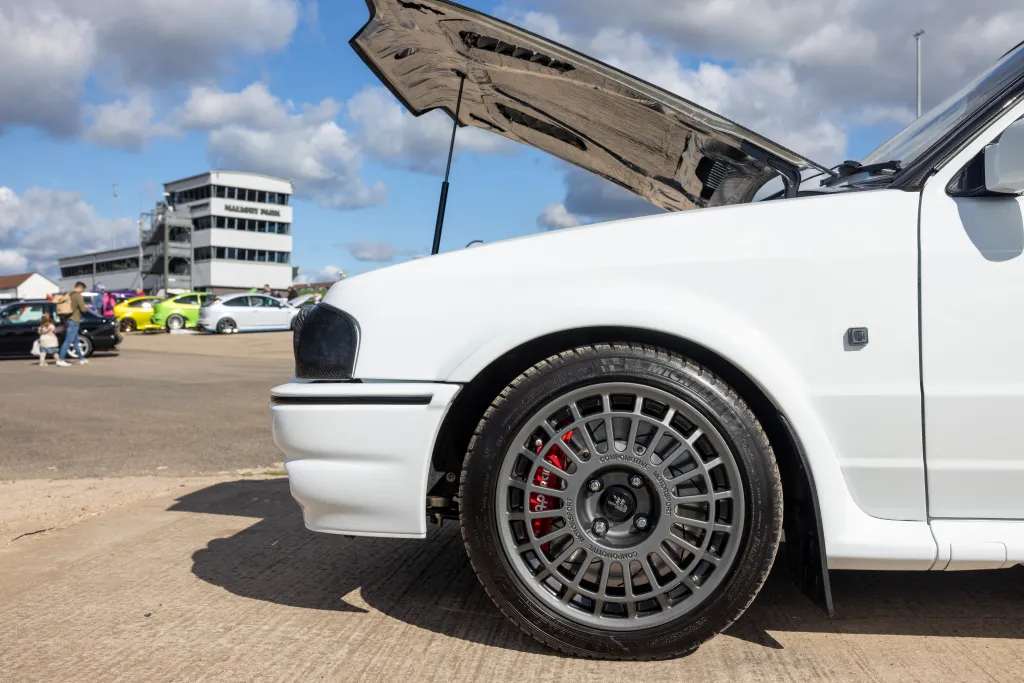
The chassis received equal attention to the drivetrain, with the floor fully restored and painted body colour. Suspension components were blasted and powder-coated, while SuperPro bushes replaced standard items throughout. The braking system features 330mm AP Racing six-pot callers at the front, complemented by Gaz coilovers that provide modernised handling characteristics.
Strategic Weight Reduction Approach
Comprehensive weight reduction measures include carbon fibre replacement of the roof skin, deletion of the sunroof tray and drainage system, carbon bootlid, removal of rear seats and glass, and elimination of electric window mechanisms. These changes contribute to the vehicle's estimated 850kg weight, creating an exceptional power-to-weight ratio.
Interior: Function Over Form
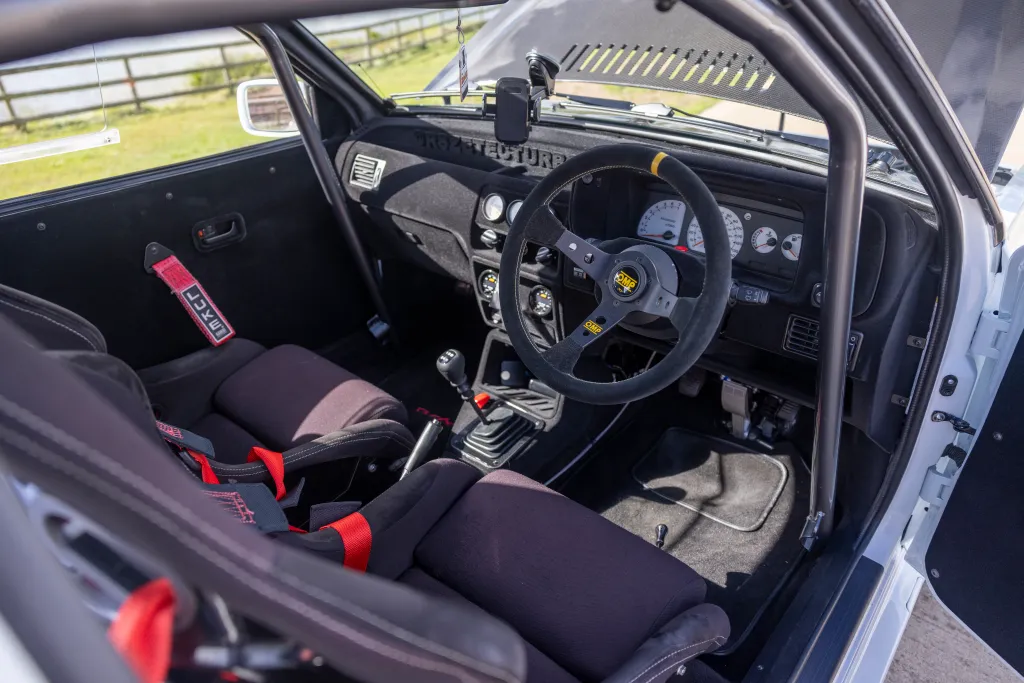
The cabin balances stripped-out aggression with period-correct aesthetics. Damaged flocked components from the initial build were replaced with assistance from Frank Flock, while Chris fabricated the door cards himself. A full roll cage replaces the previous half-cage arrangement, finished to match the wheels and providing serious competition credentials.
The interior maintains a strong old-school modified atmosphere with white-face Lockwood dials, additional gauges, boost control switches and notably absent stereo system - Chris built the car to hear the engine, not the radio.
Future Development and Enhanced Security
While the body and interior currently meet Chris's specifications, future plans include upgraded engine management, larger injectors and further engine development. Security has become a paramount concern following the theft, with the vehicle now equipped with a tracker, steering locks and Clifford alarm system.
The Resilience Behind the Build
This Escort RS Turbo's significance extends beyond its specification list to embody remarkable resilience. While many enthusiasts begin major projects, fewer complete them, and virtually none undertake a second complete rebuild after theft and severe damage. Chris's vehicle successfully combines classic Ford character with modern performance engineering, maintaining the spirit that made these cars icons while delivering contemporary driving excitement.