Ford Cosworth YB Engine Guide: How to Tune the Legendary Cossie Motor
Complete guide to the iconic Ford Cosworth YB engine. Learn its history, discover how to tune it for up to 500bhp, and find out why it remains a tuning favourite today.
The Legendary Ford Cosworth YB Engine: A Tuner's Dream
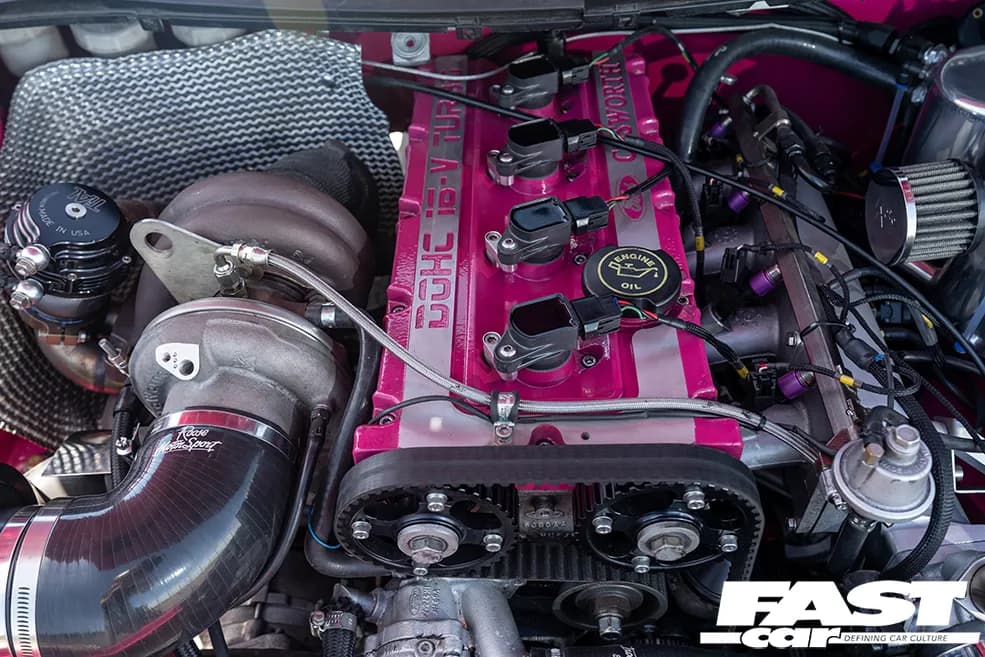
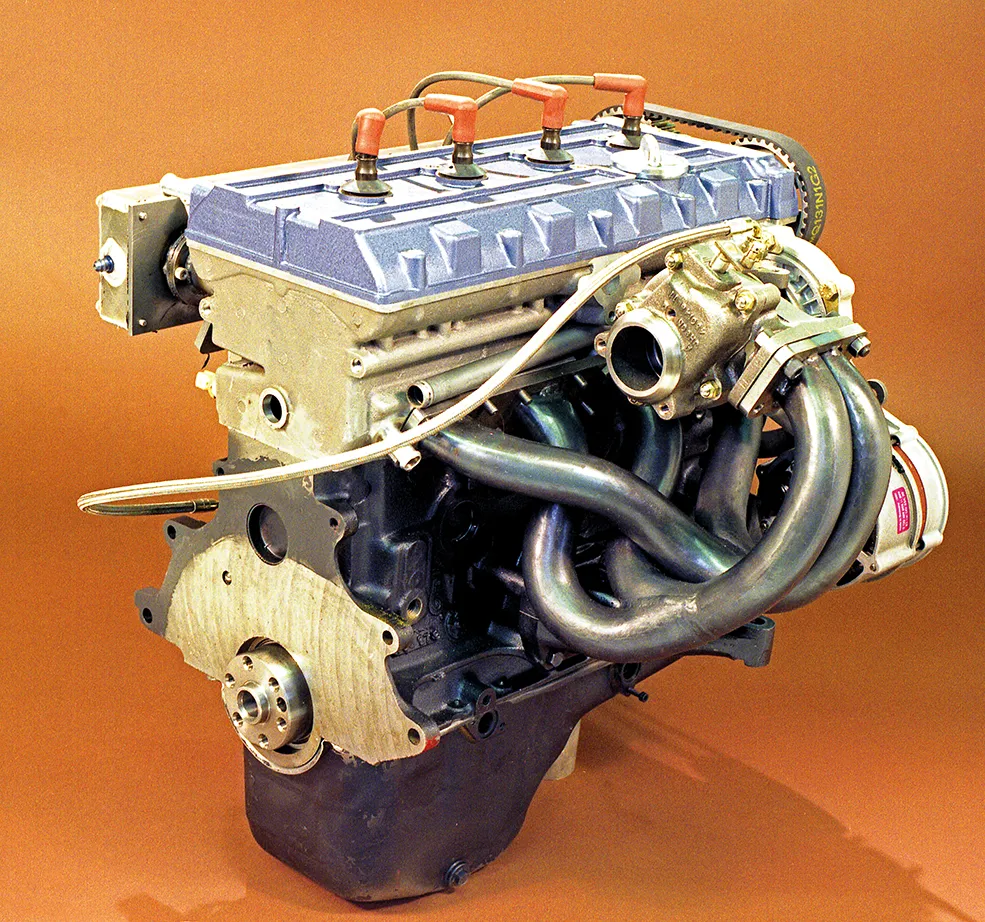
The Ford Cosworth YB engine stands as one of the most receptive engines to tuning that Ford has ever produced. This legendary power unit, which powered icons like the Sierra RS Cosworth and Escort RS Cosworth, continues to be the stalwart of the fast Ford scene. Let's delve into the history of this mighty Cossie motor and explore how to extract those impressive power figures that made it famous.
Ford Cosworth YB Engine History: From Motorsport Humiliation to Dominance
The story begins at the end of the 1970s, despite the road-going Sierra Cosworth not appearing until 1985. Ford's grip on motorsport was loosening rapidly, with even the mighty DFV Formula One engine losing out to modern turbocharged units. The catalyst came during a Ford VIP visit to the 1983 British Grand Prix at Silverstone, where Blue Oval bigwigs Stuart Turner and Walter Hayes witnessed Capris being humiliated by V8 Rover SD1s in the supporting touring car race.
This humiliation prompted immediate action. During a subsequent visit to Cosworth's premises with American Ford bosses Ed Blanch and Jim Capolongo, attention accidentally-on-purpose focused on a Pinto/T88 bottom end equipped with an aluminium, 16-valve cylinder head. By autumn 1983, Cosworth proceeded with a SOHC Pinto/T88 cylinder block-based 2.0-litre turbocharged engine that needed to produce 180bhp in road trim and over 300bhp when race-tuned.
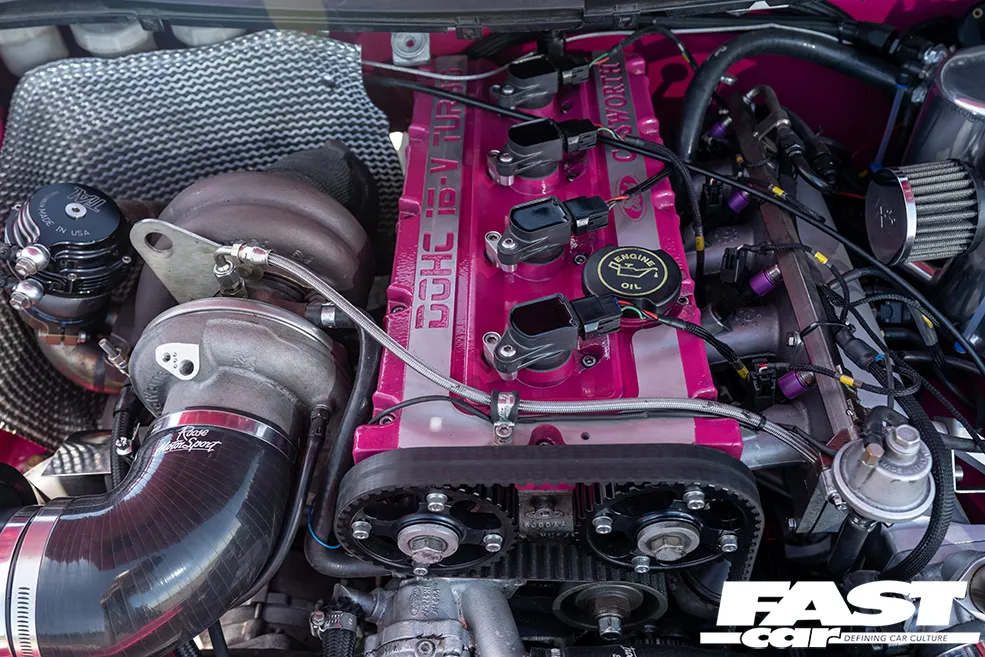
When engineers discovered that 200bhp-plus was easily achievable for road cars, this higher output was agreed. Experience later proved race engines could produce up to 350bhp with relative ease, with the big leap to 550bhp coming with the RS500-style YBD power unit in 1986.
The Development of the YB Cosworth Engine
Initially coded YAA (with YB being the production version), Mario Illien designed the original Pinto/16-valve conversion in 1983 featuring a free-breathing cylinder head optimized for 300-400bhp race engines. When ex-Weslake/ex-Lotus engineer Paul Fricker joined Cosworth at end-1983, Ford had awarded a contract to complete the engine and build a facility to produce at least 15,000 units.
This necessitated a complete redesign for road use. "At one time Ford talked of ending the project after the first 5000, but luckily they never did," recalled Fricker. The development faced numerous challenges, including changes from Bosch to Weber-Marelli fueling systems and turbo reliability issues where "the first time we put one on the durability bed, it lasted just 35 minutes before it blew up."
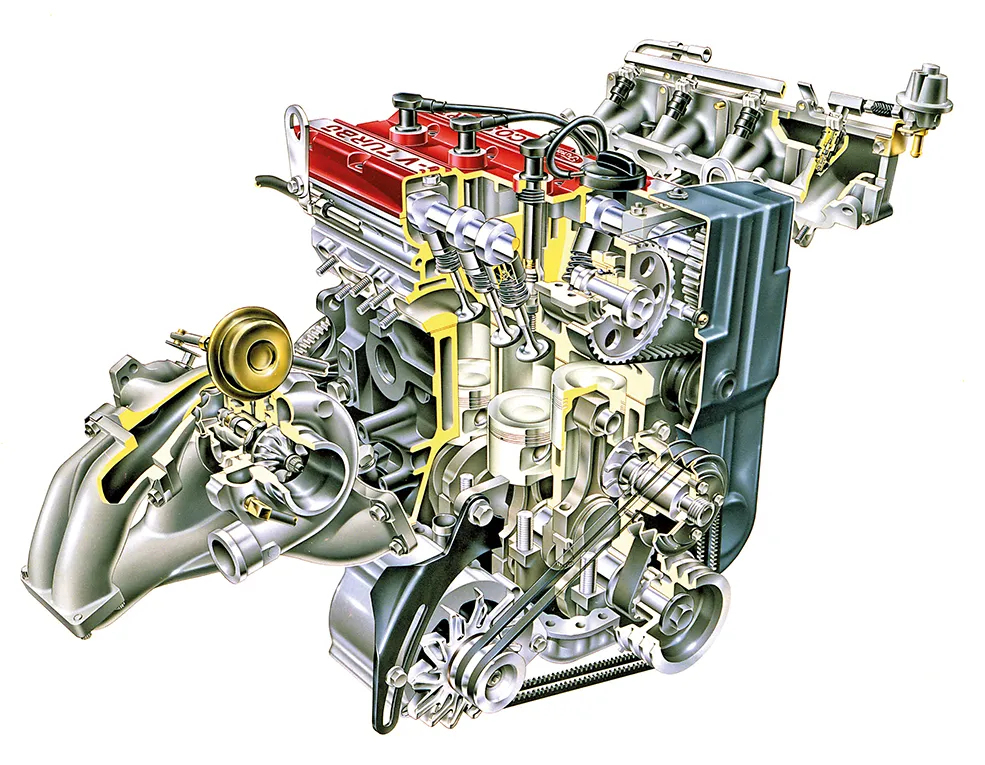
Compared with the basic Pinto, almost everything changed except the cylinder block itself. This included new cylinder head and valve gear, new steel crankshaft, rods, pistons, and sump. The use of hydraulic valve lifters was a given, though Fricker admitted "they did weigh more, and there was always a small amount of air in the oil. We ended up changing the design so they couldn't deflate overnight."
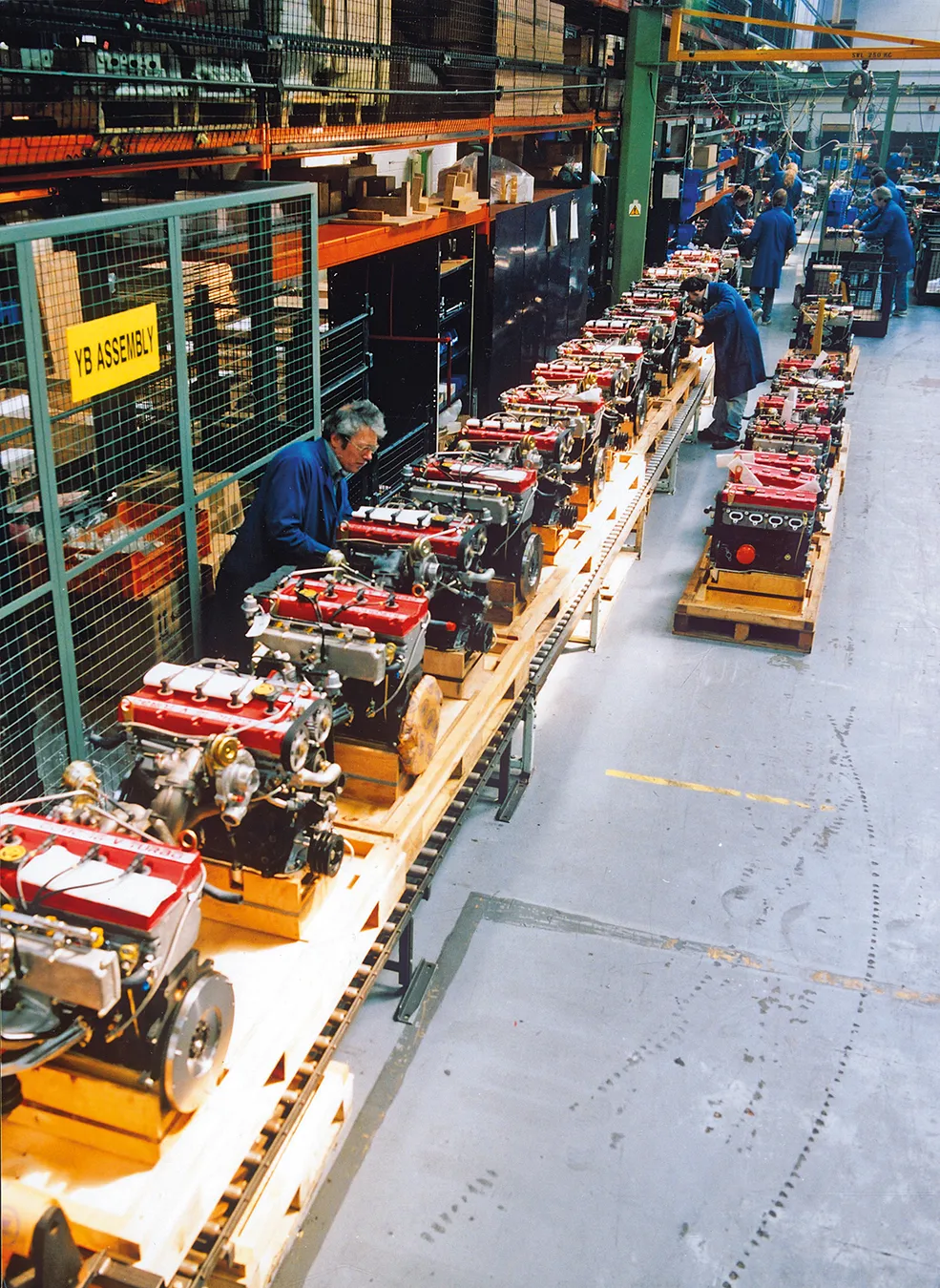
Series production started in 1985 at a new Wellingborough factory and ended in 1995 after producing approximately 39,000 YB-based engines. The big change for the Nineties was redeveloping the engine for the Escort Cosworth, originally as YBT and from 1994 as YBP. The YBT engine featured a hybrid T03/T04B Garrett turbocharger that was really too big for road cars but necessary for homologation to make the Escort Cosworth the rally winner it became.
Ford Cosworth YB Tuning Guide
Cosworth Engine Block Fundamentals
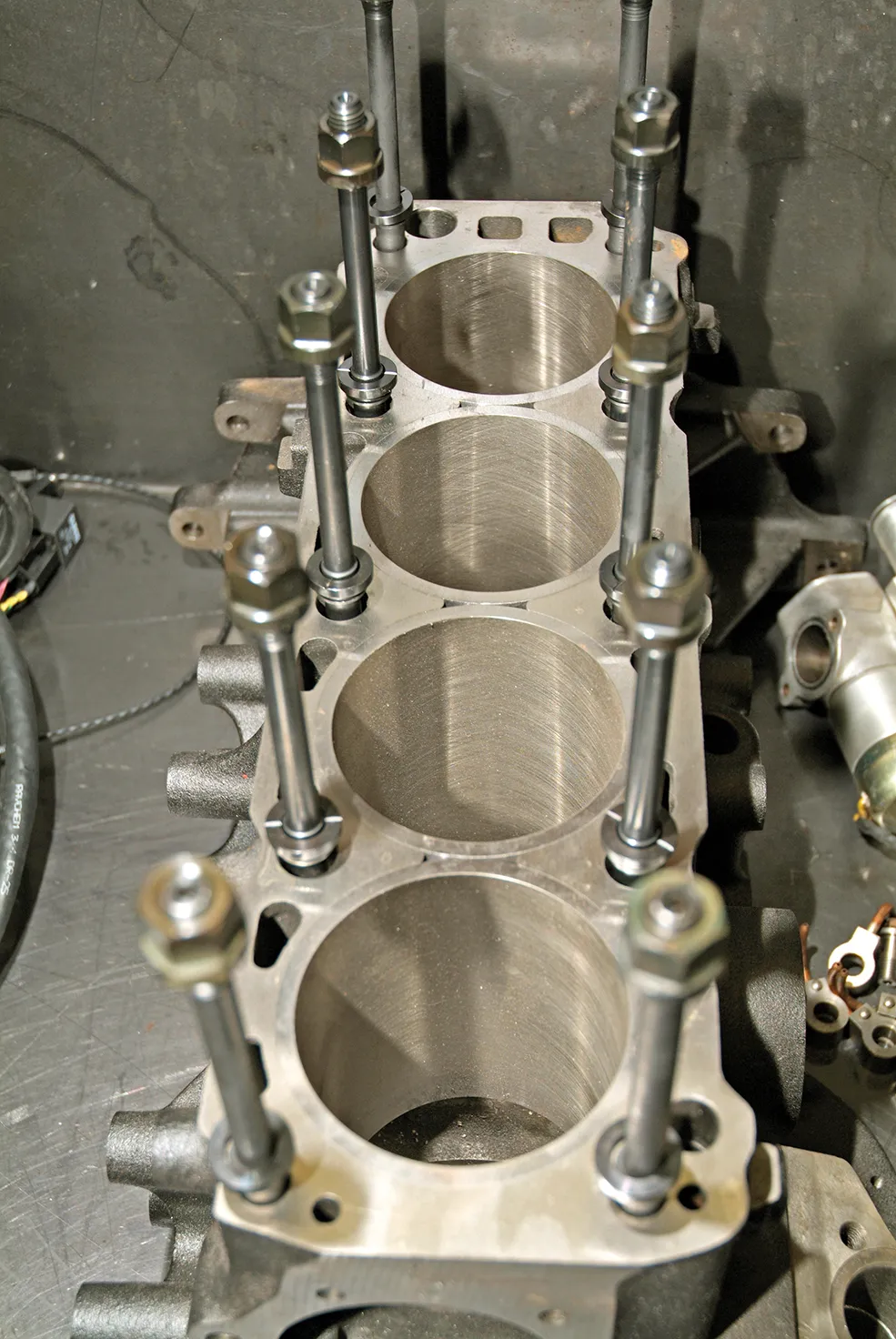
There are two main types of Cossie block – known as the 205 and the 200. The latter is a thicker-wall design found in 4x4 versions like the Escort and 1990 Sapphire, identifiable by numbers cast on the side. Interestingly, the RS500 block was a thick-wall design but stamped 205, recognizable by its smaller core plugs.
For moderate power up to 350-400bhp, either block is fine with quality fasteners and gaskets. For higher power, the 200 block is ideal as the extra material allows fitting long studs rather than head bolts, improving sealing and reliability. For engines sub-500bhp, six long studs usually suffice, while mega-power engines feature all ten long studs for even clamping force.
Liners for High-Performance Builds
Most big-power YBs feature Nikasil-coated steel liners, which are stronger with better oil control and less friction. Dry liners (3mm thick) are sleeved into the original bore, while wet liners (6mm thick) require extensive machining that removes the original bore. Today, alloy block options from specialists like Smith & Jones Engineering offer strength comparable to 200 blocks but with significantly less weight, though costing around £3500 for a bare block before options.
Cosworth Engine Internals: Strong Foundation
The factory YB internals are remarkably capable. The stock cast steel rods (superior to most OEM cast iron rods) cope with 500bhp, though their shorter length (128mm) prompts many tuners to fit longer 136mm rods for power gains up to 10bhp through improved rod angle. The stock crankshaft is also very capable and typically only changed when stroking the engine for larger displacement.
Piston Selection and Compression Ratios
Standard YB pistons work well on 400bhp engines, but when altering compression ratios or needing valve cut-outs for aggressive cams, many builders opt for forged pistons. While 7.5:1 and 7.2:1 ratios were traditional for high-boost applications, modern engine management and improved gaskets allow maintaining higher compression ratios – sometimes increasing from standard 8.0:1 to over 9.0:1.
Cosworth Turbo and Exhaust Upgrades
The turbo is a crucial component that needs careful consideration to work with the entire engine package. The standard Garrett T3 supports around 300bhp, while the traditional upgrade is the Escort Cosworth's larger T34 turbo capable of 350-400bhp. From there, a T38 hybrid reaches 400bhp+, and a T4-based turbo from the RS500 takes you to 500bhp.
Newer options include Garrett's roller-bearing GT range and BorgWarner EFR series turbos with twin-scroll designs for improved driveability. The YB's standard twin-scroll exhaust manifold readily accepts twin-scroll turbos, though bigger turbos often require a tubular exhaust manifold upgrade and external wastegate for better boost control.
Cosworth Engine Inlet and Injector Options
Inlet manifold choice has evolved from RS500 eight-injector setups to Swedish-style inlets and now Hart inlets for big-bhp builds. While roller-barrel throttles work well, individual throttle bodies with plenum chambers offer performance advantages for squeezing out every last bhp.
Traditional injector upgrades follow the Bosch colour-coded system: dark greens/803s (300-330bhp), light-blues/400s (up to 400bhp), and greys/403s (400-450bhp). Beyond 450bhp typically uses eight-injector setups, though modern engine management and injector designs now allow single sets that deliver twice as much fuel as greys without compromising low-speed driveability.
Cosworth Engine Head and Camshaft Choices
The YB head handles 350bhp in stock form, but around 500bhp the ports become restrictive. Standard 22.5mm inlet and 23mm exhaust ports can be opened to 25mm and 24mm respectively for 500bhp with standard valves. For more power, increase to 26/27mm and 25/26mm with larger valves.
Camshaft options depend on engine purpose, with BD10 inlet with standard exhaust cam being a first-stage upgrade. BD14, BD16 combinations and AB07 profiles also work well, though top-end engines use custom profiles so aggressive they require head machining to fit.
Ford Cosworth YB Engine Management Modernisation
Modern engine management offers significant advantages over simple Stage 3 chips. Features like closed-loop lambda control, wasted-spark ignition, and live mapping improve refinement for fast-road applications. Standalone aftermarket ECUs also replace aging standard wiring looms that can cause problems on older Cosworths.
Modern ECUs enable technologies like coil-on-plug ignition, knock detection, electronic boost control, launch control, full-throttle gear shifts, and anti-lag systems that enhance both reliability and performance.
Ford Cosworth YB Engine Codes: Understanding the Variants
There were actually 20 different versions of the Ford Cosworth YB engine over its production life. Key variants include the YAA (1983 original naturally-aspirated conversion), YBB (1985 series-production Sierra Cosworth), YBD (1987 RS500 with big turbo), YBT (1992 Escort RS Cosworth big-turbo road engine), and YBP (1994 small-turbo Escort Cosworth with EEC-IV management).
Finding YB Engine Parts and Community
While legendary, the Cossie YB isn't plug-n-play when it comes to parts. Specialist suppliers and online communities have become essential for tracking down rare components. Events like Ford Fair at Silverstone remain the premier gathering for Cosworth enthusiasts, showcasing some of the most highly-rated YB-powered cars in the UK Ford scene.